Get the Cost for Plumbing Help Near You
Browse different rates for plumbing help in your area and select the one that fits your budget and needs.
Get Plumbing RatesPlumbing Cost Estimates Supplemented with Real Taskrabbit Data
Plumbing issues rarely show up at a convenient time. Whether you’re dealing with a dripping faucet, a clogged drain, or a water heater that suddenly stops working, understanding typical plumbing costs can help you plan, budget, and make informed decisions.
Using research and real Taskrabbit data, this guide breaks down common plumbing prices and the factors that influence them, and ways to save. On average, plumbing tasks cost $46 per hour in the U.S.
Average Cost for Plumbing Services in Major U.S. Cities
Plumbers generally charge an hourly rate for labor, with rates being influenced by the type of job, materials needed, and location. To help you understand what pricing looks like in metropolitan areas, we’ve gathered real average hourly rates and total costs from major U.S. metros based on Taskrabbit jobs completed and supplemental research.
| City | Avg Hourly Rate | Avg Invoice Total |
|---|---|---|
| New York City | $75 | $161 |
| LA & OC | $58 | $129 |
| SF Bay Area | $67 | $135 |
| Chicago | $68 | $145 |
| Washington DC | $61 | $143 |
| Seattle | $59 | $138 |
| Miami | $55 | $156 |
| Boston | $77 | $154 |
| Austin | $59 | $130 |
| Denver | $64 | $139 |
Average Plumbing Hourly Rates by U.S. State
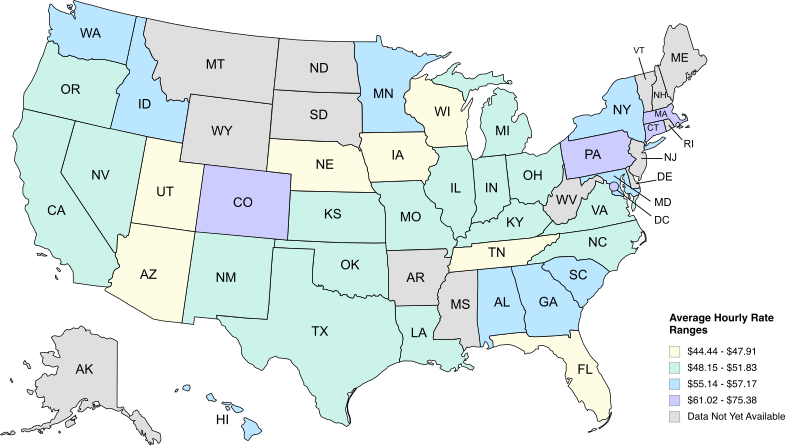
Cost for plumbing services vary from state to state just as they do with cities. Understanding state cost ranges is particularly helpful for those who do not live in major metropolitan areas. Most states, including New York, Georgia, and Virginia, fall within the middle tiers with average hourly rates for plumbing help ranging from $48.15-$57.17.
Factors that Impact How Much Plumbing Costs
Plumbing costs can vary widely, and understanding the factors behind those differences can help you plan more confidently. Here’s a deeper look at what shapes the final price of a plumbing job.
Type of Plumbing Job
Different plumbing tasks require different tools, time commitments, and levels of expertise. As a result, job type is one of the strongest predictors of cost.
Simple repairs: These include tightening loose connections, fixing minor leaks, or replacing worn-out washers. They generally take less time and fewer materials.
Drain & clog services: Clearing clogs can be straightforward or complex depending on the blockage’s location, age of pipes, and whether specialized equipment (like augers or drain snakes) is needed.
Fixture installations: Installing sinks, faucets, dishwashers, or toilets often requires precise alignment, new seals, and secure connections. The fixture type and features can influence overall labor time.
Water heater work: Water heaters involve electrical components, gas lines, pressure valves, and safety checks. Diagnosis alone may take longer than typical repairs, and replacement can require lifting, disposal, and reconnection.
Pipe repairs: Fixing a pipe isn’t always as simple as replacing a section. Accessing the pipe, behind walls, under floors, or in crawlspaces, can add significant time.
Repiping: Replacing larger sections of plumbing involves planning, materials, pipe rerouting, and multiple points of connection.
Gas line plumbing: Requires specialized skills and often state-specific credentials, which impacts pricing.
Emergency repairs: Rapid response work, especially during off-hours, tends to cost more because plumbers must shift schedules or make immediate visits.
Experience Level
A plumber’s background and skill set naturally influence their hourly rate. While all professionals bring value, the right match depends on the job’s complexity.
Apprentice: Works under supervision and handles basic repairs or support tasks. Costs tend to be lower due to limited experience, ranging from around $25-$60 per hour.
Journeyman: Competent and trained to handle most household plumbing needs independently. They can diagnose issues quickly, which may reduce total labor time. Expect rates of $65-$125 per hour.
Master plumber: Brings extensive training and expertise, often specializing in complex installations, advanced troubleshooting, or whole-system planning. Their rates reflect their high skill level, ranging from $80-$200 per hour.
For certain jobs, especially those involving gas lines, repiping, or intricate systems, a more experienced professional may be required.
Materials and Parts Required
The materials used directly affect the cost, especially when specialty components or higher-end fixtures are involved.
Pipe materials: Options like PVC, PEX, and copper vary in price, durability, and installation difficulty. Copper, for example, is more expensive but long-lasting.
Fixtures: The cost of a faucet or toilet can range widely based on brand, finish, and features such as water efficiency or touchless operation.
Specialty parts: Pressure regulators, valves, fittings, water heater components, or specific manufacturers’ parts can influence total cost. If older plumbing is involved, compatible replacement parts may be harder to find.
Even small components like connectors or seals contribute to the overall materials cost.
Job Complexity
Two seemingly similar tasks can differ greatly depending on the home’s layout or the nature of the plumbing system.
Complexity factors include:
Hard-to-reach pipes
Older or corroded plumbing
Limited access due to cabinetry, flooring, or walls
Multiple connection points
Systems that require temporary water shutoffs across the home
More complex scenarios require additional time, tools, troubleshooting, or planning.
Time to Complete
Labor time is often one of the biggest cost drivers. Simple jobs might take minutes, while larger ones can take several hours or span multiple visits.
Time increases when:
The issue takes longer to diagnose
Components need to be ordered or replaced
Fixtures must be removed and reinstalled
Plumbing is behind walls or under floors
Multiple issues are discovered during the repair
Some professionals offer estimates based on typical time ranges, but actual duration may shift as the job unfolds.
Standard vs. Emergency Work
Plumbers often offer standard appointments during regular business hours and emergency services for urgent situations. Emergency work usually costs more due to:
Off-hours or weekend scheduling
Immediate response
Potential for more extensive damage if not handled quickly
Scheduling flexibility and advance notice can help keep costs down.
Ongoing Maintenance vs. One-Time Tasks
Routine maintenance, such as checking for leaks, flushing water heaters, or cleaning drains, generally costs less per visit because the work is proactive rather than reactive.
One-time tasks like replacing a burst pipe or fixing a failing water heater often require more labor, parts, and cleanup, which increases the total cost.
Regular upkeep can help you avoid larger, more expensive repairs later.
Location
Where you live plays a big role in labor pricing and material availability.
Costs can be influenced by:
Local cost of living
Regional demand for plumbing professionals
Average home age and plumbing infrastructure
Seasonal demand (e.g., winter pipe issues)
Travel distance or access fees in rural areas
Hidden or Unexpected Plumbing Costs to Consider
Even with good research and planning, some plumbing jobs come with additional expenses that aren’t always obvious upfront. While not every project will include these, here are some common hidden costs you may encounter:
Service call fees: Many professionals charge a fee to travel to your home and evaluate the issue. This may cover the time required for the initial assessment, transportation, and basic troubleshooting before any repair work begins. Service call fees may range from $50 to $250.
Minimum charges: Some plumbers set a minimum charge for smaller tasks, even if the job takes only a short amount of time. This helps cover overhead and ensures the visit is worthwhile.
Permits: Certain projects, such as water heater installations, major pipe replacements, or gas line work, may require local permits. These fees vary by region and project type, but typically range from $50-$500.
Haul-away and disposal fees: If you're replacing fixtures, pipes, or old water heaters, there may be added costs for removing and disposing of the old components responsibly.
Camera inspections: For complex drain, sewer, or underground pipe issues, plumbers may use specialized camera equipment to diagnose the problem. These inspections can add to the total cost but often save time by identifying the exact source of the issue.
Water damage remediation: Leaks can cause damage to walls, flooring, or insulation. Repairing this damage typically falls outside standard plumbing labor and may require additional services.
Tree root infiltration issues: Tree roots can invade underground pipes, leading to blockages or pipe damage. Addressing root issues may require specialized tools, excavation, or pipe replacement.
Asbestos or lead pipe remediation: In older houses, plumbers may encounter hazardous materials such as asbestos insulation or lead piping. Specialized handling or remediation may be required, adding time and cost to the project.
Be sure to keep an eye out for any of these costs during the quoting process, or proactively flag it if you feel you may be impacted.
Common Plumbing Projects and Their Average Cost
While every project is different, here’s a breakdown of the average price for popular plumbing tasks to help you budget for your needs. Final costs will be influenced by the combination of factors discussed above, such as materials needed, experience level, and job complexity.
| Project | Estimated Cost |
|---|---|
| Toilet repair | $125-$250 |
| Burst pipe repair | $400-$1,500+ |
| Unclogging a drain | $125-$300 |
| Leaking pipe repair | $150-$450 |
| Sewer line clearing | $150-$500 |
| Water heater repair | $150-$600 |
| Leaking faucet repair | $100-$250 |
| New faucet installation | $200-$700 |
| Water heater replacement | $900-$2,500+ |
| Water softener installation | $500-$3,000 |
| Bidet attachment installation | $100-$300 |
| Full bidet fixture installation | $200-$2,000 |
| Sink installation or replacement | $250-$1,400 |
| Sump pump repair or installation | $550-$1,600 |
| Toilet replacement or installation | $300-$900 |
| Garbage disposal repair or replacement | $230-$750 |
How Long Do Plumbing Jobs Typically Take?
Plumbing task completion time will vary greatly depending on the project and conditions. The table below gives a rough estimate of the amount of time that you can expect certain tasks at different complexity levels to take.
Drain snaking: 30-90 minutes
Faucet installation: 1-2 hours
Water heater replacement: 3-6 hours
Sewer line replacement: 1-3 days
Whole-house repipe: 2-5 days
How Much Do Plumbing Materials Cost?
Plumbing materials vary widely in cost depending on the type of project, the quality of the materials, and the specific components required. Understanding these general cost categories can help you plan ahead and anticipate which items may have the biggest impact on your overall plumbing budget.
PEX pipe: $0.85-$1.50 per foot
Copper pipe: $3.00-$8.00 per foot
PVC pipe: $2.00-$4.00 per foot
CPVC pipe: $0.50-$3.00 per foot
Pipe fittings: $1.00-$20.00
Valves: $10-$50
Toilets: $100-$800
Sinks: $200-$900
Tips to Save Money on Plumbing Services
To help keep your costs in check, take these strategies into account when planning for plumbing work:
Address small issues early: A minor leak can turn into a larger job over time.
Consolidate multiple tasks into one visit: This helps reduce total labor time.
Choose materials wisely: Different pipe or fixture options can influence price.
Don’t skip routine maintenance: Proactive maintenance can prevent costly repairs later.
Ask for itemized estimates: A detailed breakdown helps you understand what you’re paying for and identify potential savings.
Get multiple quotes: Comparing estimates can help you find a professional whose pricing, approach, and availability align with your needs.
DIY vs. Hiring a Pro for Plumbing Services
Some small plumbing tasks are manageable on your own, especially if you’re comfortable with basic tools and troubleshooting. Tightening a loose faucet connection, replacing a showerhead, or unclogging a simple drain are often safe DIY projects.
However, anything involving water lines, gas lines, major fixtures, or hidden pipes generally requires professional support. Plumbing systems can be complex, and mistakes may lead to water damage or more expensive repairs down the line.
When in doubt, consider factors like:
Your comfort level with tools
The potential cost of errors
Whether the job involves cutting pipes or altering plumbing pathways
Access challenges (e.g., walls, crawlspaces)
Choosing a professional isn’t just about expertise. It’s about peace of mind and protecting your home.
How to Choose a Plumber
Finding the right person for the job depends on your needs, timeline, and comfort level. Consider the following:
Experience level: Some plumbers specialize in repairs, others in installations or larger systems
Credentials: Look for appropriate licensure in your state or region, where applicable
Reviews or referrals: Recommendations from friends, neighbors, or trusted review platforms can help guide your choice
Communication: Clear expectations about scheduling, pricing, and scope help avoid surprises
Estimates: Many plumbers offer quotes based on job type, parts needed, and expected labor
A little research goes a long way toward finding someone reliable who fits your budget and expectations.
What to Expect When Booking a Plumbing Task Through Taskrabbit
Booking plumbing help through Taskrabbit gives you an easy way to connect with independent, background-checked Taskers who offer support with common plumbing needs. You can browse Tasker profiles, compare hourly rates, check reviews, and choose someone whose skills and availability match your project. Sharing photos and a brief task description helps set expectations and allows the Tasker to arrive prepared.
Once booked, all communication and payment happen securely through the Taskrabbit platform, and you can often find same-day or next-day availability depending on your area.
*Please note that Taskers are independent contractors. If you need a licensed plumber, confirm Tasker qualifications by reading their bio or asking via chat before booking.
Frequently Asked Questions About Plumbing
It is customary to tip 10% to 20%, but not required.
Yes, emergency calls often cost more because they require immediate scheduling, off-hours work, or rapid response. If timing is flexible, opting for a standard appointment can help reduce costs.
Permit fees are not always required. Simple repairs typically don’t need one, but projects involving water heaters, major pipe changes, or gas lines may need local approval.
The cost of repairing vs. replacing depends on the condition and age of the fixture. Repairs are usually less expensive upfront, but older fixtures or corroded pipes may require frequent fixes. In those cases, replacement can be more cost-effective over time.