How Much Does Wallpaper Installation Cost?
Starting at $62/hour on average
Updated on October 1, 2026

Table of Contents
- Get the Cost for Wallpaper Installation Services in Your Area
- Wallpaper Installation Cost Estimates Supplemented with Real Taskrabbit Data
- Factors that Impact How Much Wallpaper Installation Costs
- Hidden or Unexpected Wallpaper Installation Costs to Consider
- Common Wallpaper Projects and Their Average Cost
- Frequently Asked Questions About Wallpaper Installation
Get the Cost for Wallpaper Installation Services in Your Area
Browse different rates for wallpaper installation options in your area and select the one that fits your budget and needs.
Get RatesWallpaper Installation Cost Estimates Supplemented with Real Taskrabbit Data
Wallpaper can instantly elevate a space, adding character, depth, and personality that paint alone can't match. But before starting your project, it’s essential to understand the full range of potential costs, from materials and labor to prep work and complexity.
Using research and real Taskrabbit data, this guide breaks down everything you need to know about the cost of wallpaper installation. On average, wallpaper tasks cost $62 per hour in the U.S.
Average Cost for Wallpaper Services in Major U.S. Cities
Pricing for wallpaper installation varies regionally, with rates tending to be higher in large metropolitan areas due to demand, cost of living, and local market rates. With real average hourly rates and total costs based on Taskrabbit jobs completed and supplemental research, you can get a better understanding of what wallpaper installation may cost you.
| City | Avg Hourly Rate | Avg Invoice Total |
|---|---|---|
| New York City | $78 | $334 |
| LA & OC | $56 | $230 |
| SF Bay Area | $69 | $332 |
| Chicago | $72 | $309 |
| Washington DC | $77 | $329 |
| Seattle | $66 | $351 |
| Miami | $66 | $292 |
| Boston | $93 | $341 |
| Austin | $67 | $256 |
| Denver | $67 | $355 |
Average Hourly Wallpaper Installation Rates by U.S. State
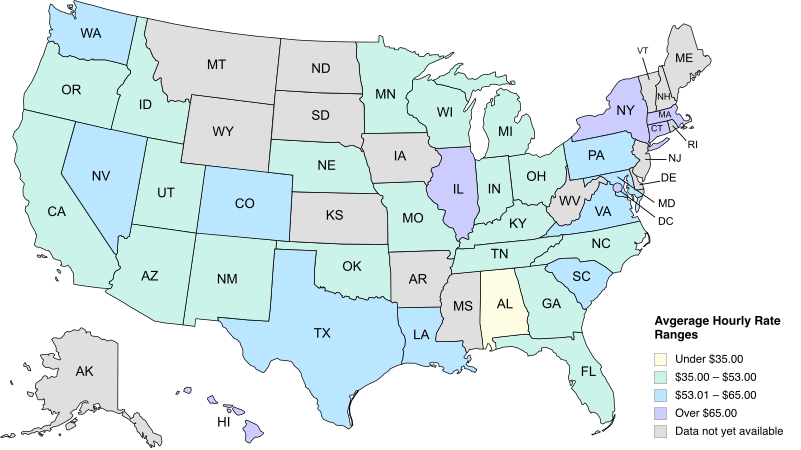
While city-level pricing offers a detailed look at local labor rates, zooming out to the state level reveals broader regional trends. This view helps highlight how costs vary across larger areas, making it easier to compare pricing patterns and identify where installation tends to be more or less expensive overall.
Factors that Impact How Much Wallpaper Installation Costs
A number of project-specific considerations influence your overall installation cost. Below is a detailed look at each factor and its impact on the final price.
Wallpaper Type
The type of wallpaper you choose is one of the biggest drivers of cost. Each material handles differently, requires varying levels of precision, and comes with its own installation challenges.
Popular wallpaper types include:
Vinyl: Durable, easy to clean, and typically easiest to install. Prices start at around $30 per roll.
Traditional paper: Lightweight, with moderate installation difficulty. Prices start at around $25 per roll.
Peel-and-stick: DIY-friendly but depends heavily on smooth walls. Prices start at around $25 per roll.
Grasscloth and natural fibers: High-end look with visible seams and more delicate handling. Prices start at around $30 per roll.
Murals and panel-based wallpaper: Require precision alignment and careful placement. Prices start at around $40 per roll.
Pattern Matching
Wallpaper with large or intricate pattern repeats requires installers to match the design at every seam. This often results in 1–2 extra rolls being needed, increasing your materials cost. Larger repeats also increase the time required to align and trim the pattern accurately.
Labor
Labor is typically the most significant portion of wallpaper installation cost. Installers may charge by the hour or by the square foot, depending on the project’s complexity.
Most wallpaper installers charge:
$2–$6 per square foot for standard wallpaper
$6–$14 per square foot for grasscloth, murals, or high-difficulty work
Minimum service fees are also common, often falling between $150 and $300.
Residential vs. Commercial Considerations
Residential and commercial wallpaper installations differ in scope, scale, and labor expectations. Residential installations usually involve smaller rooms, more detailed pattern matching, and working around existing furniture or fixtures. Commercial spaces, on the other hand, often require durable wallpapers, specialty adhesives, higher ceilings, and tighter schedule coordination, all of which can increase overall cost.
In commercial environments, installers may also need to follow additional safety protocols or work outside regular business hours, resulting in higher labor charges.
Room Type
Room layout and use directly impact wallpaper installation difficulty. Each room comes with its own set of challenges that influence the labor required.
Typical room-based cost considerations include:
Bedrooms: Often straightforward with fewer cutouts
Living rooms: Larger surface area and multiple windows
Kitchens: Frequent cutouts around cabinets and appliances
Bathrooms: Extra care needed around moisture-prone areas and plumbing
Nurseries: Typically feature bold patterns requiring careful alignment
Staircases: One of the hardest spaces due to angled walls and height
Accent walls: A budget-friendly option with minimal labor time
Walls with unique shapes, built-ins, or numerous obstacles can increase installation time.
Room Size
While the type of room dictates the difficulty, the total square footage of your walls is the primary driver of the base cost. Using the standard labor range of $2–$6 per square foot, you can estimate your budget based on common room dimensions:
Small powder room (approx. 150 sq. ft. of wall space): $300–$900
Standard bedroom (approx. 350 sq. ft. of wall space): $700–$2,100
Large living area (approx. 500+ sq. ft. of wall space): $1,000–$3,000+
Wall Conditions and Preparation
Before wallpaper can be applied, walls must be smooth, clean, and properly primed. Prep work varies widely depending on the current state of the walls.
Prep tasks may include:
Patching nail holes and cracks
Sanding or skim coating textured surfaces
Removing moisture or mildew
Priming or sealing to prevent staining
Fixing drywall issues
Light prep work might add $50–$300, while extensive repairs can significantly increase cost.
Wallpaper Removal
If existing wallpaper needs to be removed before installation, this can add substantial time and cost to your project. Removal costs vary based on the type of wallpaper, number of layers, and underlying wall condition.
Typical wallpaper removal costs range from $1 to $3 per square foot, with additional fees if walls require patching or resurfacing. When removal and installation are combined, total project costs usually fall between $600 and $2,000+.
Project Complexity
Complex projects require more time, skill, and attention to detail. Installers consider everything from ceiling height to layout to determine the level of difficulty.
Complexity factors include:
Tall or uneven ceilings
Arched or angled walls
Multiple windows and doors
Built-in shelving or cabinetry
Numerous electrical cutouts
Large pattern repeats
Tight corners or stairwells
Projects that require additional ladders, scaffolding, or specialty tools will increase the overall price.
Materials and Supplies
Material costs vary based on the wallpaper type and the specific needs of the installation. While some wallpapers come pre-pasted, others require specialized adhesives or tools.
Common material-related costs include:
Primers, sealants, and adhesives
Smoothing and trimming tools
Cutting blades
Leveling tools
Protective coverings for floors or furniture
These add-on items typically contribute $20–$150 to the total project cost.
Wallpaper Quantity
Estimating wallpaper quantity correctly ensures proper coverage and helps avoid mid-project delays. Your installer will account for waste, wall height, and pattern repeat requirements when determining how many rolls to order.
Wallpaper quantity is based on:
Roll coverage
Room dimensions
Number of walls
Ceiling height
Need for extra rolls for future repairs
A general rule of thumb is to order 10–20% extra wallpaper to accommodate trimming and pattern matching.
Hidden or Unexpected Wallpaper Installation Costs to Consider
Beyond wallpaper and labor, there may be other expenses depending on the project.
Potential additional costs include:
Furniture moving
Travel fees in remote areas
Rush or after-hours installation premiums
Debris disposal or haul-away fees
Specialty wallpaper shipping or freight charges
These costs vary by installer and project type, so it’s best to confirm any add-ons upfront.
Common Wallpaper Projects and Their Average Cost
This table provides a high-level look at how the previously discussed variables can translate into real-world project totals. Depending on the room's complexity and the type of material you select, overall costs will scale to account for labor intensity and the necessary preparation for a durable finish.
| Project | Estimated Costs |
|---|---|
| Wallpaper removal | $600-$2,000 |
| Bathroom wallpaper installation | $500-$2,000 |
| Accent wall wallpaper installation | $150–$600 |
| Single room wallpaper installation | $400-$2,000 |
How Long Does Wallpaper Installation Take?
The time it takes to install wallpaper depends on several factors, including room size, wallpaper material, and the amount of prep work involved. Having a general sense of the timeline can make scheduling and project planning much easier.
Additional time may be needed for removal or wall repair, but typical installation times include:
Accent wall: 2–4 hours
Bedroom: 6–12 hours
Bathroom: 4–8 hours
Murals: 2–5 hours
Grasscloth: 6–10 hours
Tips to Save Money on Wallpaper Installation Services
Saving money doesn’t have to mean compromising on quality. A few strategic decisions can significantly reduce overall installation costs without sacrificing the final result.
Ways to save include:
Handling basic wall prep yourself
Choosing wallpaper with minimal pattern repeat
Opting for an accent wall instead of whole-room coverage
Ordering extra wallpaper when promotions are running for discounted rates
Comparing quotes from multiple installers
Selecting peel-and-stick for temporary spaces
DIY vs. Hiring Help for Wallpaper Installation
Installing wallpaper yourself can be a satisfying DIY project, but the process requires patience, precision, and proper tools. Understanding what’s involved can help you decide whether DIY or professional installation is the better choice for your space.
If you’re considering DIY, you’ll need to be comfortable with:
Purchasing the right tools such as brushes, blades, and levels
Managing air bubbles, seams, and pattern alignment
Preparing the wall properly
Handling delicate or expensive wallpaper
DIY costs typically total $50–$150 for tools alone, not including the wallpaper itself.
Professionals and independent contractors offer the benefit of experience, specialized equipment, and the ability to work efficiently. For high-end materials, large spaces, or pattern-sensitive designs, hiring a professional often results in a cleaner, longer-lasting finish.
How to Choose a Wallpaper Installer
Choosing the right wallpaper installer helps ensure a smooth, high-quality finish. Here are the most important qualities and questions to consider when evaluating potential installers:
Experience with your specific wallpaper type
A portfolio showing clean seams and consistent pattern matching
Clear communication about prep needs and project timelines
Ability to explain how they handle complex projects
Transparent pricing and itemized quotes
Willingness to conduct a site visit or review photos before quoting
Positive reviews or references from previous customers
Fair pricing without unusually low or vague estimates
Frequently Asked Questions About Wallpaper Installation
Tips are optional but appreciated. Many customers tip 10–20% for exceptional work.
Wallpaper may improve buyer perception by making spaces feel more custom, but it generally doesn’t change the appraised value directly.
Typically, yes. Large pattern repeats require more material and additional alignment time.
These spaces require extra precision and often involve more obstacles, such as fixtures or angled walls.