

Get the Cost of Movers in Your Area
Browse different rates for various movers in your area.
Get Moving RatesMoving Cost Estimates Supplemented with Real Taskrabbit Data
Moving can be both a stressful and an expensive feat. That’s why we want to help you prepare and budget for your move with estimated costs using research and real Taskrabbit data. On average, moving tasks cost $40 per hour in the U.S.
Average Cost for Moving Services in Major U.S. Cities
Moving costs can vary widely depending on where you live, local demand, and the type of services you need, so we’ve gathered average hourly rates and total costs from major U.S. metros by using data from Taskrabbit jobs completed and supplemental research to give you a realistic sense of what a move might cost in your city.
| City | Avg Hourly Rate | Avg Invoice Total |
|---|---|---|
| New York City | $56 | $163 |
| LA & OC | $42 | $136 |
| SF Bay Area | $51 | $148 |
| Chicago | $52 | $146 |
| Washington DC | $52 | $162 |
| Seattle | $44 | $142 |
| Miami | $46 | $165 |
| Boston | $57 | $138 |
| Austin | $46 | $135 |
| Denver | $52 | $162 |
Average Hourly Moving Rates by U.S. State
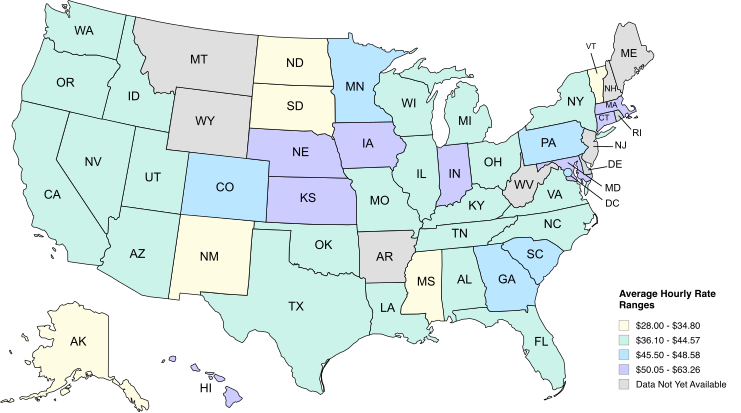
The map above offers a state-level view of average hourly rate ranges for moving services, providing a broader context of overall regional patterns beyond individual city averages. When viewed this way, most states with readily available data fall within the middle range of $36.10-$44.57 average hourly rates. This map is most helpful as a high-level planning tool, especially for moves that extend beyond major metros or involve multiple locations within a state.

Factors that Impact How Much Movers Cost
There are a number of elements to take into account when budgeting for a move. Consider how the below factors may influence your rate from movers.
Distance
A local move (~50-100 miles) is typically going to be less expensive than a long-distance or international move as they require less time and fewer resources.
Less than 50 miles: $300-$800 estimated average cost
50-100 miles: $500-$870
100-500 miles: $800-$2,500
500-1,000 miles: $1,500-$4,500
1,000+ miles: $1,800-$6,000+
Services Needed
While a full-service move may be the easiest, as packing, loading, transporting, and unpacking are all handled for you, it will cost you more than a partial moving service that covers a select few tasks.
Truck or Van Rental
If you’re planning to do the transportation yourself, you will likely need to rent a vehicle that fits all of your belongings. While final cost will depend on the size of the truck and the distance you drive, base rates start around $20/hour.
Add-ons
Additional moving support may also be purchased, such as furniture assembly and disassembly, appliance setup, or temporary storage.
Supplies
Whether you hire full-service movers or pack on your own, you will likely need to purchase materials like boxes, packing tape, garbage bags, and more to ensure you have everything required for a clean, organized move. You may also want equipment like hand trucks or dollies for smooth loading and unloading.
Size, Weight, and Types of Belongings
Heavier or specialty items can also increase your total cost. For instance, moving a piano typically costs between $150 and $500 for local moves, with long-distance moves exceeding $1,000.
Valuable antiques require custom crating and extra padding, which can add $200 to $1,000. Oversized items, like sectional sofas or king-size beds, require disassembly and reassembly, increasing labor costs. Movers might charge an extra $50 to $200 for these services.
Other specialty items to account for in your total moving rate include:
Pool tables (up to $700)
Safes (up to $500)
Hot tubs (up to $1,000)
Appliances (up to $150)
Home Size
The more things you have to pack and transport, the more expensive your move may be as it can take longer and require more hands on deck. While a 1-bedroom move could cost as little as $300 for a local move, you could spend over $5,000 to move your items from a 4-bedroom home.
Studio or 1 bedroom: $300-$800 estimated national average cost
2 bedrooms: $900-$2,800
3 bedrooms: $1,500-$3,200
4+ bedrooms: $1,800-$6,000+
Timing
Different times of the year, month, or even week can result in higher costs for moving.
Annually: Spring and summer months are the most popular time for people to move, so you may have to pay a premium price if you are moving during this time.
Monthly: People most often move at the very end of the month if they operate on lease cycles that start on the 1st.
Weekly: Friday, Saturday, and Sunday are the most common days of the week to move, likely so that people do not have to take time off of work.
Booking a move during any of these peak periods can result in costs increasing up to 40%.
Accessibility
If you are moving into or out of a building that requires movers to go up and down flights of stairs or through narrow or long passageways, a surcharge may be added to your total bill.
Location
Where you are moving directly to or from can influence your moving rate as well. Moving in New York City is typically going to cost more than moving in Princeton, New Jersey.
How Much Do Local Moves Cost?
For local moves, costs are typically charged by the hour, with rates varying based on the size of the crew and the scope of work.
Hourly Rates: On average, local moving companies charge between $50 and $150 per hour. This rate often includes two movers and a truck, but additional labor, such as a third or fourth mover, can increase the hourly cost by $25 to $50 per person.
Crew Size: The size of the moving crew depends on the size of your home. A small apartment might require just two movers, while a larger home may need three or more.
Overall, you can expect to spend around $1,000 or less on a local move.
How Much Do Long-Distance Moves Cost?
Long-distance moves are typically priced on mileage and the weight of your belongings, making them more complex to calculate than local moves.
Fuel: Whether you are hauling your items across state lines yourself, or having a moving company do it for you, you can expect to pay for the gas needed for transportation. Companies like U-Haul give you the option to fill the truck up on your own, or have them do it for you with an agreed-upon price-per-gallon.
Weight: If you hire movers that charge based on weight on your items, you can expect a rate of $0.50 to $0.80 per pound. A 3-bedroom move can weigh up to 7,000 pounds to transport all belongings.
For moves over 100 miles, total prices can range from $800 to $10,000 or more, depending on the distance and load weight. On average, moving a 1-bedroom apartment across state lines might cost around $1,500 to $2,500, while a larger 4-bedroom home could exceed $5,000 to $7,000.
Common Moving Projects and Their Average Cost
From start to finish, the moving process includes a handful of different jobs that must be tackled, from cleaning, to packing, to reassembling all your furniture. The good news? You don’t have to do them all by yourself. See how much, on average, different moving projects cost.
| Project | Average Cost |
|---|---|
| Packing | $750 |
| Unpacking | $650 |
| Junk Removal | $300 |
| Couch removal | $150 |
| One item moving | $200 |
| Full service moving | $1000+ |
| Move in/out cleaning | $250 |
| Truck assisted moving | $600 |
How Much Do Packing Supplies Cost?
While your mind may go directly to the transport of your items when you think of moving, you also must consider the pre-work of packing when estimating costs. Overall, you may spend as little as $50 to over $200 on supplies to prep for your move when purchasing the following supplies:
Boxes: Single boxes start at as little as $1 per box. You can also get specialty boxes, like wardrobe boxes for around $12 to $20 per box, or specialty glass and dish boxes for $10 to $20 per box.
Packing tape: Prices range from $2 to $20 depending on the type of tape and how many rolls.
Bubble wrap: You can spend anywhere from $3 to $30+ on bubble wrap based on the amount of fragile items you own.
Mattress bags: Twin-sized mattress bags start at around $5, with king-sizes bags reaching up to $20.
Markers: Labeling your boxes and bags will help when it comes time to unpack. You can snag a marker for as low as $2.
Dollies: You can purchase or rent a dolly to easily move your items for as low as $12. If you are renting a truck, you can likely add dollies or hand trucks to your reservation.
If you’re thinking of hiring movers, be sure to ask what supplies, if any, will be provided by the company.
Hidden or Unexpected Moving Costs to Consider
When budgeting for your move, make sure you factor in these sometimes overlooked costs that should be accounted for. These often come as "surprises" at the end of a move.
Fuel
Depending on how far you are moving, fuel and tolls will typically be factored into your total moving cost. Fuel is usually calculated as a percentage of the total cost, however it can add up to anywhere between $50 to several hundred dollars.
Parking and Permits
You may also have to take into account parking passes or permits. To get the most realistic idea of how much your move will cost, it is best to do this research in advance, by either asking moving companies for a written quote upfront, inclusive of all expected fees, and discuss parking options with your building, neighborhood, or community if needed.
Cleaning
An overlooked step and cost of moving is the cleanup afterwards. If you are moving out of a rental space, you want to get back as much of your security deposit as possible, so leaving your place clean is crucial. You’ll want to gather supplies or hire a cleaning service to handle it for you.
Tips to Save Money on Moving Costs
You can help lower your moving costs by:
Decluttering before you pack. This reduces the number of items you have to take with you and the time it will take to pack and unpack.
Packing your own belongings. Packing your own belongings significantly reduces labor costs and gives you more control. Try to upcycle existing materials for packing, such as blankets and towels, and source boxes from local stores to save money. Check out our packing survival guide for more tips.
Booking during off-peak times. Moving during off-peak seasons, such as in the winter, can help you secure better deals. Opting for a mid-week or mid-month move can lead to lower rates and more flexible scheduling.
Disassembling furniture yourself. Having your furniture disassembled and ready to be loaded into the moving truck will speed up the entire moving process, in turn saving you money.
Getting multiple quotes. Don’t settle for the first moving company you come across—shop around to find the best deal. Moving costs vary widely; getting at least three estimates makes sure you’re paying a fair price.
DIY Moving vs. Hiring Movers
When moving, you have a few options to choose from when deciding if you want to do it entirely yourself, source help from a moving company, or a little of both. DIY-ing it can save you money, while hiring movers can save you time. Read on to decide which moving method is best for you.
Fully DIY Moves
Doing it all yourself? Props! Offering to buy your friends some pizza for their help? We’ve been there. Make sure, however, that you are prepared for all that you’ll need to do. It is recommended to book your rental truck, if needed, as far in advance as possible, and to order your supplies, like boxes, to get your packing kickstarted.
Full DIY moves are best suited for smaller moves, local moves, people who want full control and flexibility, or when you’re really trying to save up
Hybrid Moves
This type of move is best for people who need a bit of help, but aren’t interested in committing to full-service. In this type of move, you own some of the work, while hiring help for other tasks.
If cleaning, packing, and organizing is your jam, but manual labor isn’t, you can do all the pre-moving work while movers load and transport your items. On the other hand, you may want to personally ensure you’ve moved all your items, but need some help with the last few steps to unpack and assemble or reassemble your items.
Full-Service Moving
Full-service moving is best for large homes, long-distance moves, or when you need speed and efficiency. While a full-service move will be the most expensive option, moving professionals handle the heavy lifting, unloading, and more to make sure your items arrive safely.
How Can I Estimate the Cost of a DIY Move?
If you’re going to do the move on your own, you will need to factor in the cost of packing supplies (boxes, tape, etc.), a truck rental (including fuel!), and equipment.
To estimate your DIY moving cost, calculate:
The amount of packing supplies needed: Depending on the amount of items you have, expect to spend at least $50 on boxes, tape, and other packing items.
How long you will need to rent a truck: Are you moving nearby and only need it for a few hours? Or are you moving cross-country and need it for a few days? Base rates for local moves start at $20/hour while long-distance moves can exceed a few hundred dollars.
How far you anticipate driving it: Even if you are moving locally, you will need to consider how many trips you’ll take back and forth to move all of your items to account for fuel costs.
How much moving equipment you need: If you can carry everything on your own, consider us impressed. If you want some support, you can buy or rent hand trucks or dollies for as little as $12
Choosing the Right Moving Support
Moving expenses can add up quickly, so it's important to carefully consider where to source help from. When making the decision on who to hire, look into:
Reviews: It’s crucial to do your homework by researching a company’s reputation online. Read reviews on Google or Yelp, check their reputation through the Better Business Bureau, or ask the moving company for references for firsthand experiences.
Licensing and insurance: Hiring a licensed and insured moving company isn’t just a formality—it’s essential for safeguarding your belongings. Start by checking for a U.S. Department of Transportation (DOT) number for interstate moves, or confirm local licensing for a local move. Also make sure the company offers basic liability insurance and ask about additional coverage options if interested.
Potential scams: Unfortunately, not all moving companies are legitimate. One warning sign includes quotes that seem too good to be true; it could lead to hidden fees or surprise charges later. Additionally, any move requiring upfront cash payments is never a good sign. Legitimate movers typically require a deposit but never full payment before the move occurs. Finally, verify the moving company has a business address and contact information. A little caution upfront can save you a lot of trouble later.
Frequently Asked Questions about Moving Costs
Typically, it is customary to tip 10% to 20% of the total moving cost. Consider the quality of service, complexity of the move, and the number of movers when deciding how much you’d like to tip.
For a local move, expect to spend at least $200, but depending on the amount and type of items you have, you could spend upwards of $1,000 or more.
For a long-distance move, expect to spend anywhere between a few hundred to a few thousand dollars. The distance of the move is a major factor along with how much you're moving in terms of total items, weight, and space taken on the moving truck.
For a full-service move, expect to spend at least $2,000. Specifics of your moving rate will be determined by factors such as distance and home size/amount of items.