How Much Does Cabinet Installation Cost?
Starting at an average of $38/hour
Updated on October 1, 2026
Table of Contents
- Get the Cost for Cabinet Installation Services Near You
- Cabinet Installation Cost Estimates Supplemented with Real Taskrabbit Data
- What Factors Impact Cabinet Installation Costs?
- How Long Does Cabinet Installation Take?
- What Are Cabinet Installation Costs by Project Type?
- Cabinet Installation Frequently Asked Questions
Get the Cost for Cabinet Installation Services Near You
Browse different rates for cabinet installation in your area and select the one that fits your budget and needs.
Get Cabinet Installation RatesCabinet Installation Cost Estimates Supplemented with Real Taskrabbit Data
Planning to refresh your kitchen, upgrade a bathroom, or add practical storage to another room? Understanding the costs associated with cabinet installation is key to a smooth project. This guide will walk you through the factors that influence your final bill, help you compare options, and offer practical tips to budget effectively along with estimated costs based on real Taskrabbit data and supplemental research.
At Taskrabbit, cabinet installation tasks are categorized as Minor Home Repairs, and on average, these jobs cost $38 per hour in the U.S. You can expect cabinet installation specific jobs to align with these figures.
How Much Does Cabinet Installation Cost in Major U.S. Cities?
Cabinet installation costs can vary quite a bit depending on where you live, with labor rates and the cost of living influencing local pricing. To give you a better idea, here's a look at estimated average costs in several major U.S. cities.
| City | Avg Hourly Rate | Avg Invoice Total |
|---|---|---|
| New York City | $70 | $172 |
| LA & OC | $51 | $134 |
| SF Bay Area | $64 | $185 |
| Chicago | $60 | $184 |
| Washington DC | $58 | $210 |
| Seattle | $54 | $144 |
| Miami | $44 | $154 |
| Boston | $87 | $229 |
| Austin | $62 | $196 |
| Denver | $55 | $129 |
What Are the Average Hourly Rates for Cabinet Installation by U.S. State?
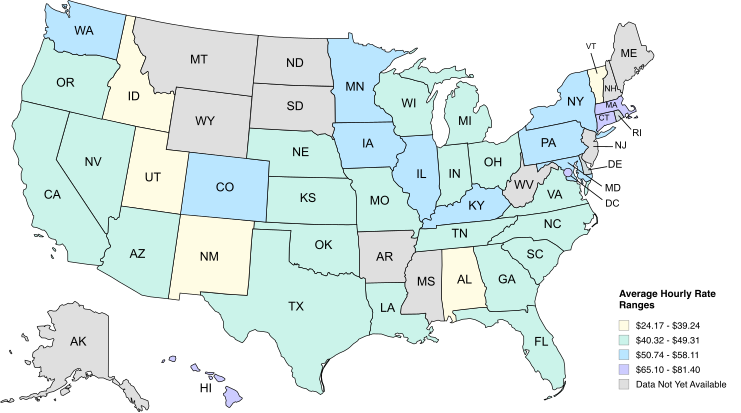
Labor costs for cabinet installation also show regional differences, often fluctuating from state to state. While project complexity and cabinet type play a role, understanding general hourly rates in your area can help you set a realistic budget for hiring help.
What Factors Impact Cabinet Installation Costs?
When you’re looking at quotes for cabinet installation, it’s helpful to know what’s driving the price. Many elements come into play, from the cabinets themselves to the specifics of the room. Here's a breakdown of the key factors that can impact your total cost.
Labor Rates and Pricing Method
How an installer charges for their work will directly affect your bill. Understanding these methods can help you compare quotes more accurately:
Per linear foot: This method is common for larger projects, especially kitchen remodels. The cost is based on the total length of the cabinets being installed, providing a straightforward estimate for extensive runs. On average, cabinet installation costs $50-$450 per linear foot.
Per hour: For smaller jobs, like installing a single cabinet or a few units, an hourly rate is typical. This allows for flexibility and ensures you only pay for the time spent on the task. As noted above, hourly rates cost around $38 on average based on Taskrabbit jobs completed data.
Per cabinet: Some installers may offer a fixed price per cabinet unit. This can be useful for projects with a clear count of individual cabinets, offering a predictable cost per item. If using a per cabinet pricing structure, you can expect to pay $125-$500 per cabinet.
Cabinet Type
The kind of cabinets you choose will significantly affect both material costs and installation labor. More complex or heavier cabinets often require more time and precision to install.
Stock cabinets: These are mass-produced in standard sizes and are the most budget-friendly option. Installation is generally straightforward, as they require minimal customization. Stock cabinet installation prices can range from $100 to $300 per linear foot.
Semi-custom cabinets: Offering more size options and design choices than stock cabinets, semi-custom units might need slight adjustments during installation, which can add to labor time. Semi-custom cabinet installation prices can range from $150 to $600 per linear foot.
Custom cabinets: Built to your exact specifications, custom cabinets fit unique spaces perfectly but can be the most expensive to install due to their intricate design and often heavier, higher-quality materials. Custom cabinet installation prices can range from $500 to $900 per linear foot.
Base cabinets: These sit on the floor and support countertops. While generally sturdy, proper leveling and securing are crucial. Base cabinet installation prices can range from $150 to $800 per linear foot.
Wall cabinets: Installed above base cabinets, these require careful measurement and secure anchoring into wall studs, making their installation a bit more labor-intensive and often requiring two people. Wall cabinet installation prices can range from $100 to $500 per linear foot.
Material Type and Quality
The material your cabinets are made from influences their durability, weight, and sometimes the care needed during installation. Heavier or more delicate materials may require more careful handling and can increase labor time.
Laminate: An affordable and durable option, laminate cabinets are relatively easy to install.
MDF (Medium-density fiberboard): A good balance of cost and performance, MDF cabinets are uniform and generally straightforward to install.
Plywood: Stronger and more moisture-resistant than MDF, plywood cabinets can be heavier and might require more precise cuts if on-site modifications are needed.
Solid wood: Often the heaviest and most expensive, solid wood cabinets require careful handling to avoid scratches and dings during installation, potentially increasing labor time.
Thermofoil: A vinyl film pressed onto MDF, thermofoil cabinets are durable and easy to clean, with installation similar to MDF.
Particleboard: The least expensive option, particleboard cabinets are lightweight but less durable. Installation is simple, but extra care is needed to prevent damage.
Stainless steel: Popular in modern and commercial kitchens, stainless steel cabinets are durable but can be heavy and require specialized tools for installation, which may increase labor costs.
Room Type
The room where cabinets are being installed also plays a role in the overall cost, as different rooms have varying layouts, existing structures, and functional requirements.
Kitchen: Typically the most complex and costly, kitchen cabinet installations involve numerous cabinets, often around plumbing, electrical outlets, and appliances, requiring precise measurements and cutouts.
Bathroom: Usually smaller projects involving a vanity or a few wall cabinets. These often require plumbing disconnections and reconnections, adding a layer of complexity.
Pantry: Often involves floor-to-ceiling shelving or built-in units. Installation can be straightforward if the space is clear, but custom solutions can increase costs.
Laundry room: May involve a mix of base and wall cabinets, often around utility hookups. Balancing storage with appliance clearance is a common consideration.
Garage: Focuses on utility and durability. While aesthetics might be less critical, garage cabinets are often heavy-duty and require secure mounting to withstand significant weight.
Project Size
The total footprint of your project is the primary driver of installation costs. Professionals typically estimate based on the number of individual cabinets or total linear footage. A small laundry room involves fewer units and less time, keeping labor costs lower. In contrast, a full kitchen with an island and floor-to-ceiling pantries requires significantly more precision. Beyond the unit count, complex layouts with multiple corners require additional time for leveling and fitting, which will influence the final budget.
Complexity
Even with a similar number of cabinets, project complexity can significantly drive up installation costs. Factors impacting complexity include:
Uneven walls or floors: These issues require shimming, sanding, or other adjustments to ensure cabinets are level and plumb, adding to labor time.
Older homes with non-standard dimensions: Older structures often have unique quirks that make standard cabinet installation more challenging, requiring custom cuts and modifications.
Installing upper cabinets: These require precise measurements, secure anchoring into wall studs, and often specialized tools, making them more labor-intensive than base cabinets.
Tight spaces or difficult access: Working in confined areas can slow down the installation process, increasing labor hours.
Custom trim, fillers, crown molding: These decorative elements require meticulous cutting, fitting, and finishing, adding significant time and skill to the job.
Cutouts for appliances, plumbing, or outlets: Creating precise openings for utilities requires careful measurement and specialized tools, which increases complexity.
Removal and Disposal of Old Cabinets
Before new cabinets arrive, existing units must be carefully removed, which can add $300-$500+ to your final bill. This phase involves more than just pulling boxes off the wall; it requires a systematic approach to protect your drywall and disconnect integrated appliances. Once removed, disposal is a key logistical factor. Most municipalities have strict rules regarding construction debris, so professionals often include a haul-away fee. This covers the labor of loading materials and any tipping fees charged by local waste management facilities.
Add-Ons
Various enhancements and finishing touches can increase both the material and labor time for your cabinet installation.
Hardware installation: Adding handles, knobs, or pulls is often a separate step that takes additional time to measure and install precisely.
Soft-close hinges or drawer systems: While often included with higher-end cabinets, installing these mechanisms separately adds to the labor.
Under-cabinet lighting: Integrating lighting requires electrical work and careful placement, making it a more specialized add-on.
Pull-out shelves or organizers: These internal accessories improve functionality but require additional time to install within the cabinet boxes.
Crown molding and trim: These decorative pieces require careful measurement, miter cuts, and precise fitting to achieve a polished look, significantly adding to labor.
How Long Does Cabinet Installation Take?
The time it takes to install cabinets can range anywhere from a few hours to several days, depending on the scope and specifics of the project. Many factors impact the installation time, including the total number of cabinets, the type of cabinets being installed (e.g., stock versus custom), whether any assembly is required, the condition of the walls, if old cabinets need removal, and any desired add-ons.
Here are some general estimates for how long different types of cabinet installations might take:
Single cabinet: 2 to 3 hours, especially if it's a replacement or a straightforward install in a clear space.
Bathroom or small room: 1/2 to 1 full day, often involving a vanity and perhaps one or two wall cabinets.
Standard kitchen: 2 to 4 days, for a complete set of base and wall cabinets in an average-sized kitchen.
Custom kitchen or large project: 3 to 7 days or more, depending on the complexity of the design, custom features, and the number of cabinets.
What Are Cabinet Installation Costs by Project Type?
Budgeting for cabinet installation becomes clearer when you consider the type of project you're tackling. Different projects have different needs, which naturally affect the overall cost. Here's a breakdown of estimated price ranges for common cabinet installation types.
| Project Type | Estimated Cost |
|---|---|
| Single cabinet | $125-$500 |
| Bathroom vanity | $750-$2,000 |
| Custom cabinets | $5,000-$10,000 |
| Garage cabinets | $1,000-$4,000 |
| Laundry room cabinets | $1,500-$3,000 |
| Standard kitchen cabinets | $3,000-$5,000 |
Should You DIY or Hire Help to Install Cabinets?
Deciding whether to install cabinets yourself or hire help is a big choice, and it really comes down to your comfort level, available time, and the complexity of the job. While DIY can save on labor costs, it demands specific tools, precise measuring, secure wall anchoring, careful leveling, and a significant time commitment. Professional or skilled help, on the other hand, brings accuracy, efficiency, less rework, and safer handling of heavy upper cabinets.
When to DIY Cabinet Installation
Taking on the installation yourself can be a rewarding way to save money on simpler projects where you have the right tools and some experience.
Consider a DIY approach if you are:
Installing a single unit: Projects involving only one or two pre-assembled cabinets are generally manageable for a solo DIYer.
Working with a clear space: This option works best if your walls are in good condition and do not require demolition or structural repairs.
Avoiding utility lines: You should only DIY if the project does not require moving or reconnecting plumbing or electrical wiring.
Equipped with the right tools: You will need specialized equipment for precise leveling and secure wall anchoring to ensure a professional finish.
When to Hire Help for Cabinet Installation
For larger or more technical projects, bringing in an experienced worker can save time and ensure a flawless, safe finish. Consider hiring help if you are:
Mounting upper cabinets: These units are heavy and require secure anchoring into wall studs to prevent safety hazards.
Navigating uneven surfaces: Professionals have the expertise to use shims and levels to correct for uneven walls or floors.
Managing complex layouts: Multi-cabinet runs or "U-shaped" kitchens require perfect alignment that is difficult to achieve without experience.
Adding custom trim: Tasks like scribing, installing crown molding, or fitting custom fillers require meticulous cuts and specialized carpentry skills.
Working near utilities: Installations that sit close to plumbing or electrical lines benefit from experienced hands to ensure all connections remain safe and accessible.
How Can You Save Money on Cabinet Installation?
Installing new cabinets is a significant investment, but there are smart ways to keep costs in check without compromising quality. With a little planning, you can make your budget go further.
Choose stock or ready-to-assemble options where appropriate, as these are generally less expensive than semi-custom or custom cabinets.
Keep the existing layout to avoid major adjustments to plumbing or electrical, which can significantly increase labor and material costs.
Reuse hardware when practical; if your existing handles and knobs are still in good condition and fit your new design, you can save on purchasing new ones.
Handle emptying cabinets, site preparation, and cleanup yourself to reduce the time an installer spends on non-installation tasks.
Compare quotes from a few different trusted professionals and confirm exactly what labor includes to avoid surprises.
Bundle adjacent small tasks if allowed and efficient; for example, if you have other small handyman tasks, inquire if they can be done during the same visit to save on separate travel fees.
Time your cabinet and hardware purchases around promotions, but remember that sales are not always guaranteed savings.
Avoid false savings from under-scoped estimates that exclude essential elements like removal, disposal, trim, or hardware installation; always get a comprehensive quote.
When Should You Repair vs. Replace Cabinets?
Deciding whether to repair your existing cabinets or invest in entirely new ones is a common dilemma. Both options have their merits, and the best choice depends on the condition of your current cabinets, your budget, and your long-term goals for the space.
You should consider repairing your cabinets when:
The cabinet boxes are structurally sound, meaning there’s no warping, significant water damage, or sagging.
The issues are mostly cosmetic, such as scratches, dents, or a faded finish that can be refreshed.
Doors and hardware can be replaced or updated without needing full cabinet replacement.
The existing layout still works well for your needs and you’re not looking for a major redesign.
Your budget is limited, making a full replacement less feasible at the moment.
You should consider replacing your cabinets when:
The existing cabinets are significantly damaged or deteriorating, with structural issues like water damage, mold, or severe warping.
You need a completely new layout for your kitchen or room to improve functionality or flow.
You want new features or functionality that your current cabinets cannot accommodate, like soft-close drawers or specific storage solutions.
Your current cabinets are low-quality or simply outdated, and a refresh won't achieve the look or durability you desire.
Cabinet Installation Frequently Asked Questions
Tipping for cabinet installation is not strictly required, but it's a thoughtful gesture for excellent service. If you choose to tip, 10-20% of the labor cost is a common range, or a flat amount like twenty to fifty dollars per person for a job well done.
No, cabinet installation cost typically refers only to the labor involved in physically installing the cabinets. The cost of the cabinets themselves is a separate expense that you purchase directly from a supplier or manufacturer.
Cabinet installation can be priced either per linear foot or per cabinet, depending on the professional and the scope of the project. Per linear foot pricing is common for larger kitchen projects, while per cabinet or hourly rates might be used for smaller jobs. Always clarify the pricing method with your chosen installer.
While a skilled carpenter certainly has the expertise, you don't always need a dedicated carpenter for cabinet installation. Many trusted handymen or general installers have the necessary skills and experience for cabinet installation, especially for standard stock or semi-custom units.
Yes, installing new, well-chosen cabinets can significantly add value to a home, especially in key areas like the kitchen and bathroom. Updated cabinets enhance aesthetics, improve functionality, and often provide a strong return on investment by appealing to potential buyers.