Ceiling fans are not just about staying cool in the summer; they’re also secret weapons for warming up your space in the colder months. Beyond the refreshing breeze they provide, most ceiling fans come with a nifty feature – the ability to rotate in different directions. The direction your fan spins can make a significant impact on your room’s temperature depending on the season. In this article, we’ll delve into the world of ceiling fan rotations and unravel everything you need to know about optimizing their direction for each season.
How to determine your ceiling fan direction
To determine your ceiling fan direction, stand directly underneath and turn it on low speed. Feel a distinct downdraft? That’s counterclockwise (summer mode). Feel minimal air movement? That’s clockwise (winter mode).
Here’s the simple test:
Strong downward breeze: Counterclockwise rotation (summer setting)
Little to no breeze: Clockwise rotation (winter setting)
Ceiling fan direction for summer
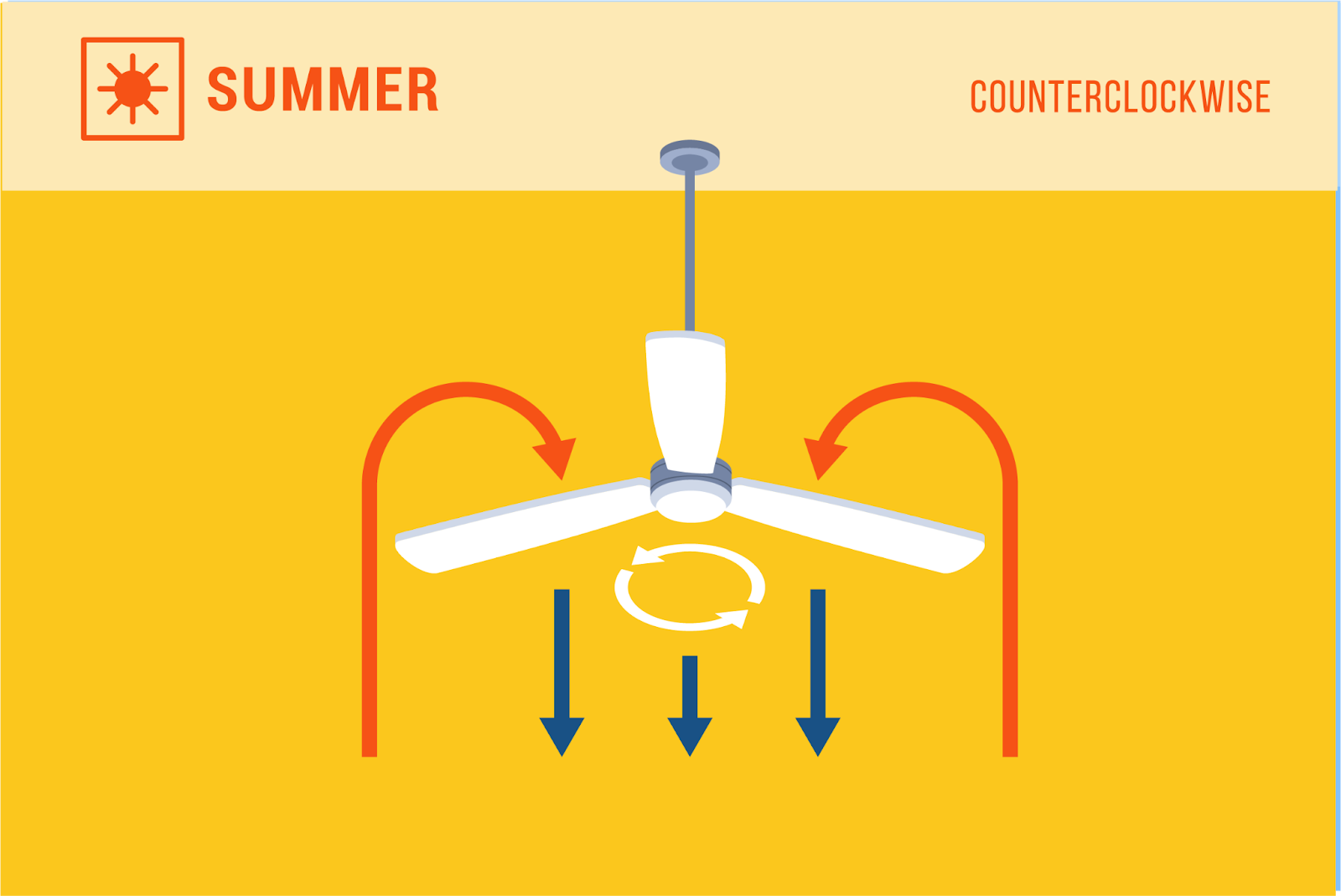
For summer cooling, set your ceiling fan to rotate counterclockwise. This creates a downward airflow that makes you feel up to four degrees cooler.
Key summer fan benefits:
Wind chill effect: Creates cooling sensation without lowering room temperature
Energy savings: Allows you to raise thermostat by a few degrees, especially effective alongside efficient systems like mini-splits
Efficient circulation: Moves air in a cooling column throughout the space
Most fans switch to counterclockwise when the motor housing switch is flipped down. Always turn fans off when leaving the room since they cool down a room through perception, not temperature change.
Ceiling fan direction for winter
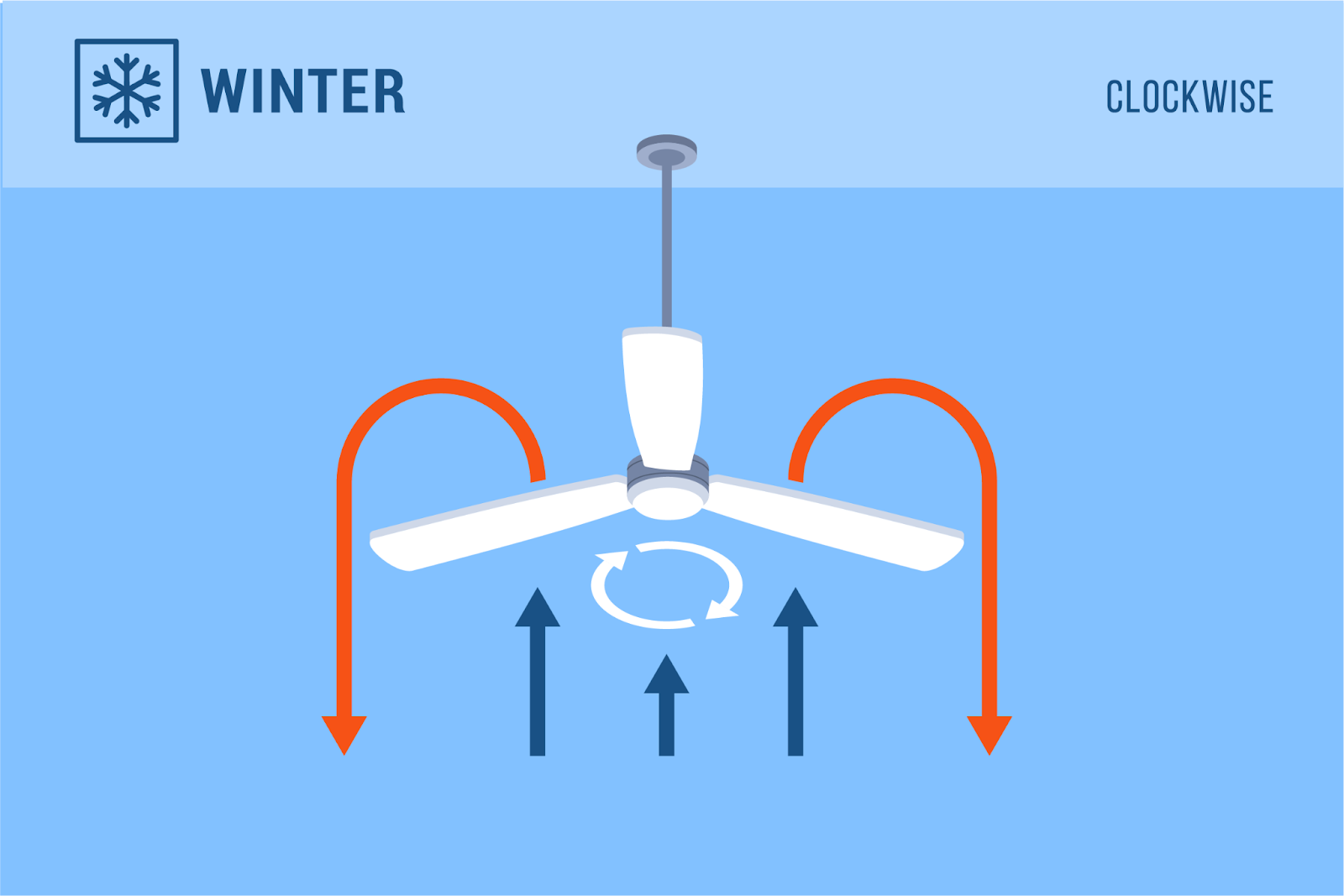
For winter heating assistance, set your ceiling fan to rotate clockwise at the lowest speed. Paired with properly insulated windows, this pulls cool air up and pushes warm air down from the ceiling.
Winter fan setup:
Direction: Clockwise rotation
Speed: Lowest setting only
Effect: Redistributes trapped warm air without creating cooling breeze, helping save on your heating bill
To determine if your fan is rotating clockwise, stand below it and observe if the blades move from left to right. The magic happens when the fan pulls cool air upwards, displacing the warm air that lingers at the ceiling and pushing it down along the walls to create a cozy, warming up the room throughout.
How to change ceiling fan direction
Changing your ceiling fan direction is simple:
Turn off the fan and wait for blades to stop completely
Locate the toggle switch on the motor housing (center part)
Flip the switch to the opposite position
Test the new direction by turning the fan back on
No visible switch? Check for a reverse button on your remote, wall control, or smart home device.
Additional factors for ceiling fan direction
Now that you’re familiar with the optimal fan directions, consider these additional factors for a more tailored experience:
High ceilings: For lofty spaces with high ceilings, it’s advisable to leave the fan running counterclockwise consistently, as the breeze generated may go unnoticed. However, the key determinant for effective air circulation is the fan speed. To cool a room, set the fan to medium or high, and for warming, keep it on a low speed.

Dining rooms: If your dining area boasts a ceiling fan, opt for a clockwise rotation at a low speed. Running it counterclockwise may inadvertently cool your food.

Outdoor fans: Ensure that your patio fan is designed for outdoor use. To cool the outdoor space effectively, run the fan at a high speed in a counterclockwise rotation. An added benefit is that the airflow can help deter bugs.
Indoor smoking: In the presence of indoor smoking, set the fan to rotate clockwise. This helps in pushing smoke out of the room.
Get help optimizing your home comfort
Mastering your ceiling fan is a small change that makes a big difference, saving you from sweating through summer nights and shivering on winter mornings. It’s one of those little home victories that just feels good. But if you’re looking at a wobbly fan, a mysterious switch, or are thinking about an upgrade, you don’t have to go it alone. A skilled Tasker can help with everything from installation to maintenance, so you can get back to enjoying the perfect temperature. Book trusted help for home tasks.
Frequently asked questions about ceiling fan direction
Which way should a ceiling fan go to cool down a room?
Counterclockwise rotation creates a cooling downward breeze through wind chill effect.
How do I know if my ceiling fan is summer or winter?
Stand under the running fan: strong downward breeze means summer mode (counterclockwise), minimal breeze means winter mode (clockwise).
How do I know the direction of my ceiling fan?
Watch the blades from below: left to right movement is clockwise (winter), right to left is counterclockwise (summer).
Should the fan be on when the AC is on?
Yes, using both allows you to raise your thermostat by up to four degrees while staying comfortable.
What if I don’t feel any air blowing from my fan, even after testing both clockwise and counterclockwise rotations?
If you feel no airflow in either direction, your fan may need replacing due to worn blade angles.
Last updated on July 27, 2026 by Grace Branscome