How Much Does Flooring Installation Cost?
Starting at an average of $54/hour
Updated on May 1, 2026
Table of Contents
- Get the Cost for Floor Installation Services Near You
- Flooring Installation Cost Estimates Supplemented with Real Taskrabbit Data
- Factors That Impact Floor Installation Costs
- How Long Does Flooring Installation Take?
- Flooring Installation Costs by Square Footage
- Flooring Installation Frequently Asked Questions
Get the Cost for Floor Installation Services Near You
Browse different rates for flooring installation in your area and select the one that fits your budget and needs.
Get Flooring Installation RatesFlooring Installation Cost Estimates Supplemented with Real Taskrabbit Data
Considering new floors? Whether you're sprucing up a single room or overhauling your entire home, understanding the costs involved is key to smart budgeting. This guide breaks down the expenses for flooring installation, helping you plan for material, labor, and everything in between.
The average cost for flooring installation can vary widely, but typically ranges from $3 to $15 per square foot. This includes both materials and labor. However, several factors, from the type of flooring you choose to your location, will impact your final bill. We’ve also pulled real Taskrabbit data based on floor installation jobs completed, and found that it costs, on average, $54 per hour in the U.S.
Average Cost to Install Floors in Major U.S. Cities
Flooring installation costs can differ significantly depending on where you live. Cities with a higher cost of living or strong demand for skilled professionals often see higher labor rates.
| City | Avg Hourly Rate | Avg Invoice Total |
|---|---|---|
| New York City | $65 | $256 |
| LA & OC | $47 | $169 |
| SF Bay Area | $66 | $205 |
| Chicago | $59 | $215 |
| Washington DC | $65 | $221 |
| Seattle | $55 | $345 |
| Miami | $49 | $198 |
| Boston | $72 | $222 |
| Austin | $71 | $395 |
| Denver | $55 | $398 |
Average Hourly Rates for Floor Installation by U.S. State
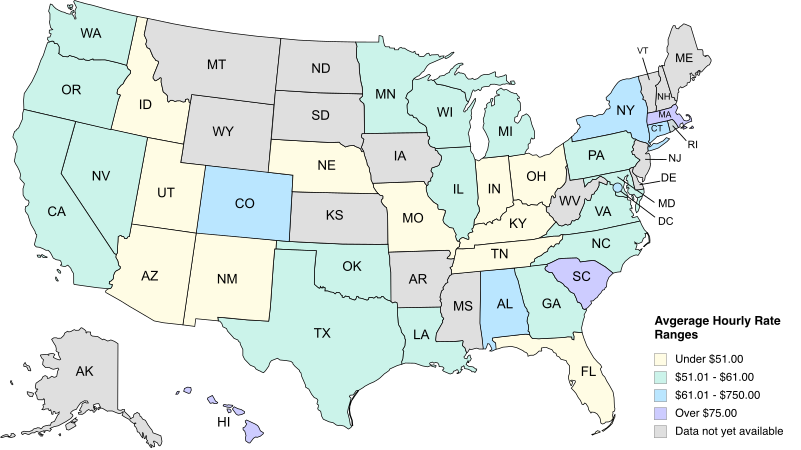
Beyond city-specific variations, average hourly rates for floor installation also fluctuate across different states. Understanding these regional differences can help you set realistic budget expectations outside of major metropolitan cities.
Factors That Impact Floor Installation Costs
Many elements influence the total cost of installing new floors. Knowing these factors will help you understand why quotes vary and what to look for when planning your project.
Flooring Material Type
The material you choose is one of the biggest drivers of cost, affecting both the price per square foot and the time it takes to install.
Tile: From ceramic to porcelain, tile offers durability and design versatility. Installation often requires specialized tools and expertise for cutting, setting, and grouting. Expect material costs from $2-$10 per square foot.
Hardwood: Solid hardwood floors are a timeless choice, offering natural beauty and long-term value. Material prices range from $5-$15 per square foot, with installation being more intricate than some other options.
Engineered wood: A popular alternative to solid hardwood, engineered wood is more resistant to moisture fluctuations. Material costs typically fall between $3-$12 per square foot, with a somewhat simpler installation process than solid hardwood.
Stone: Materials like marble, granite, or slate bring a luxurious, high-end feel but come with a higher price tag and complex installation. Material costs can range from $5-$25 per square foot, and they are heavy, requiring careful handling.
Carpet: Often the most budget-friendly option, carpet provides warmth and sound absorption. Material costs range from $1-$6 per square foot, and installation is generally quicker, though it requires specific stretching tools.
Laminate: A durable and cost-effective option that mimics wood or tile, laminate materials cost between $2-$7 per square foot. It’s known for its relatively easy, click-and-lock installation.
Vinyl: Including luxury vinyl plank (LVP) and luxury vinyl tile (LVT), vinyl is water-resistant and versatile. Material costs are typically from $4-$12 per square foot, with straightforward installation methods.
Linoleum: An eco-friendly choice made from natural materials, linoleum comes in sheets or tiles. Material costs are generally $2-$8 per square foot, and sheet linoleum installation can be complex, requiring professional seamless techniques.
Thicker or premium-grade materials will almost always increase both your material costs and the labor required for installation due to their weight and precision needs. Some materials, like certain hardwoods or laminates, also require an underlayment or moisture barrier, adding to your overall expense.
Labor Rates and Location
Labor is a significant portion of your project total and fluctuates based on geography. In urban areas or regions with a higher cost of living, you will typically find higher hourly rates for skilled workers. In busy markets, high demand can also drive up pricing. Conversely, while rural areas may have lower labor rates, fewer available professionals might lead to travel fees if your location is remote.
Subfloor Preparation
The subfloor is the foundation of your project, and any issues must be resolved before new flooring is laid to ensure a level finish and prevent future squeaking or cracking. Most independent contractors will perform a thorough inspection and suggest one or more of the following preparation steps:
Old floor removal: Stripping away existing materials is a labor-heavy first step. Removing old tile, for example, is more time-intensive and costly than pulling up carpet. Expect removal costs to range from $1-$5 per square foot.
Subfloor leveling: If a subfloor is uneven or sloped, contractors use a self-leveling compound or sanding techniques to create a flat surface. This specialized work typically costs between $2-$8 per square foot.
Structural repairs: If the inspection reveals rot, water damage, or mold, particularly in kitchens or bathrooms, the subfloor may need partial or full replacement. Repair costs vary widely based on the damage but generally range from $10-$30 per square foot.
Underlayment installation: Depending on your new material, you may need a new layer of plywood or a moisture barrier. This adds a layer of protection and soundproofing, with material and labor costs ranging from $0.50-$5.50 per square foot.
Room Type
The specific room you're flooring can also influence installation costs due to varying complexities and requirements.
Bedroom: Generally straightforward, typically rectangular, with minimal obstacles.
Living room: Often larger, potentially requiring more material, but usually with a simple layout.
Kitchen: More complex due to appliances, cabinetry, and plumbing fixtures, requiring more precise cuts and potential waterproofing.
Bathroom: The smallest rooms but often the most complex, with precise cuts around toilets, sinks, and showers, plus crucial waterproofing considerations.
Basement: May require specific moisture barriers and durable, water-resistant materials, adding to both material and labor costs.
Staircases: Extremely labor-intensive due to the need for individual cuts, nosing, and intricate finishing work on each step.
Rooms with many corners, closets, or built-ins increase the amount of cutting and detail work, which naturally extends labor time.
Layout Complexity and Design
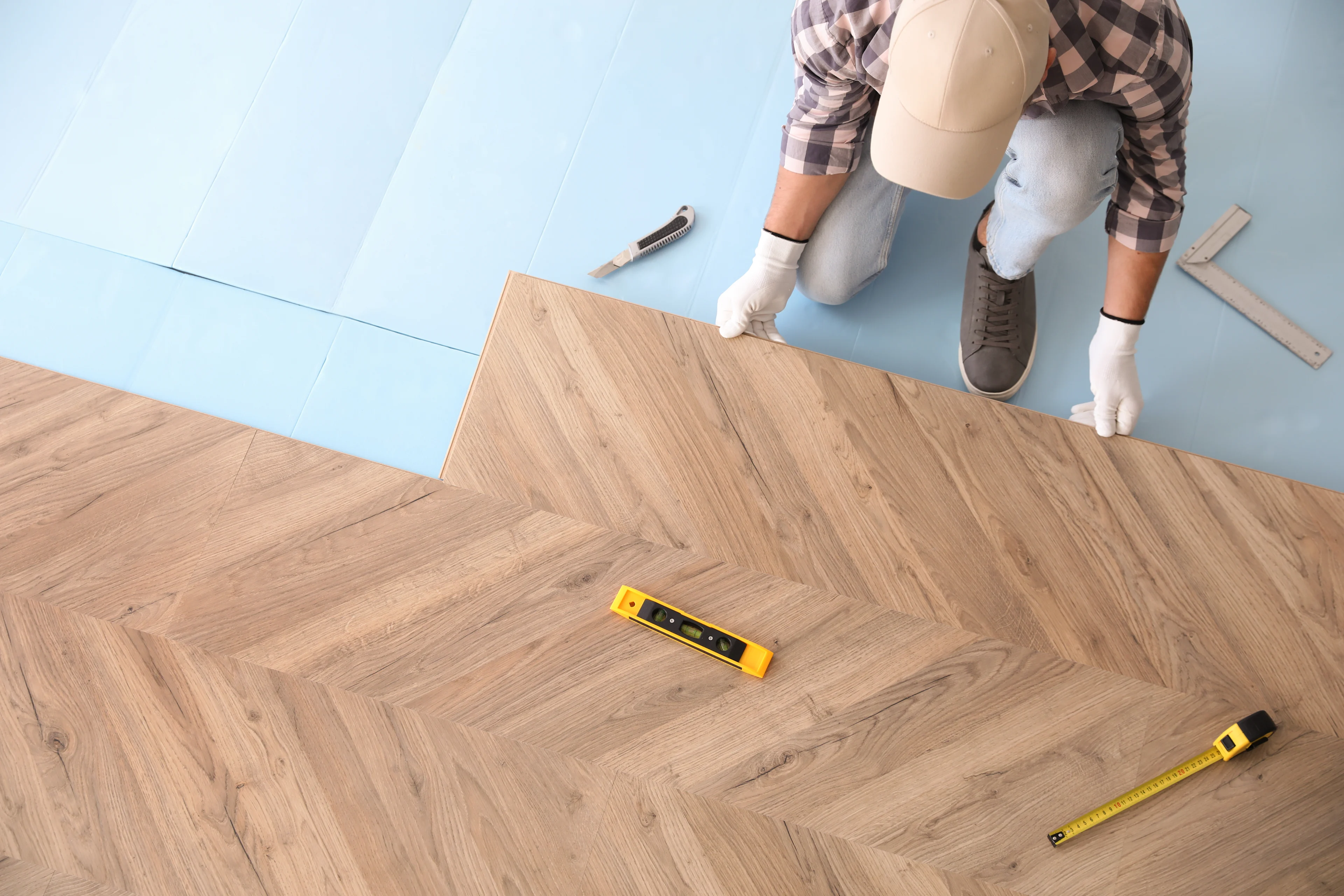
While straight installations are the most cost-effective, custom designs will increase your total. Diagonal installs, herringbone patterns, or custom inlays require extra time for precise alignment and more material for waste. Additionally, projects involving multiple flooring transitions or irregular room shapes require more detailed trim work and specialized skill.
Room Size (Square Footage)
Generally, larger projects allow for greater efficiency, which may reduce your overall cost per square foot. However, for very small rooms, independent contractors may charge a minimum fee to cover the time and travel for the job. When calculating your budget, remember to include a waste factor of 5% to 10% to account for necessary cuts and errors during the process.
Permits, Disposal, and Additional Fees
Standard flooring replacements rarely require a permit, but structural changes or adding radiant heating may require local municipal approval. Disposal fees for heavy materials like tile or hardwood are typically higher than for carpet. Some professionals may also charge a separate fee for moving heavy furniture or conducting moisture testing on concrete slabs before installation begins.
How Long Does Flooring Installation Take?
Planning a flooring project means understanding not just the cost, but also the timeline. Most flooring projects take anywhere from 1 to 5 days to complete, though this can vary greatly depending on the material, total square footage, and the amount of prep work needed. Knowing what impacts the installation time will help you plan for disruption, furniture movement, and when your room will be fully usable again.
Total completion time will be impacted by:
Square footage and layout complexity
Removal of old flooring
Subfloor repairs or leveling
Custom patterns or stair installation
Crew size
Material acclimation requirements
Drying or curing time
Flooring Installation Costs by Square Footage
To help you get a clearer picture of budgeting, here are some estimated price ranges for common project sizes. Remember, these are averages, and your final cost will depend on material choice, labor rates, and project complexity.
| Square Footage | Estimated Cost |
|---|---|
| 25 sq. ft. (powder room) | $150-$500 |
| 300 sq. ft. (Living room) | $900-$3,000 |
| 180 sq. ft. (Large bedroom) | $700-$2,000 |
| 500 sq. ft. (Large open area) | $1,500-$6,000 |
| 40 sq. ft. (standard bathroom) | $250-$800 |
| 100 sq. ft. (Office or small bedroom) | $500-$1,000 |
DIY vs. Professional Floor Installation
Deciding whether to install new flooring yourself or hire a professional is a big decision that balances upfront costs, time commitment, and long-term results. It’s about weighing your skill level against the project's complexity and the durability you expect.
When it comes to flooring, an incorrect DIY installation can lead to costly repairs down the road, while a professional job offers peace of mind and often a warranty.
When DIY Floor Installation May Make Sense
For those with a bit of handy experience and a good amount of patience, a DIY approach can be appealing for certain types of flooring.
Lower upfront cost: You save on labor fees, which can be a significant portion of the total project cost.
Tool rental costs: While you save on labor, you'll likely need to rent specialized tools like tile saws, nail guns, or carpet stretchers, which adds to your budget.
Time intensive: DIY projects almost always take longer than professional installations, especially if you're learning as you go. Plan for evenings and weekends.
Higher risk of errors: Mistakes can lead to wasted materials, an uneven finish, or even issues like squeaks and gaps, potentially requiring more expensive fixes later.
When Professional Floor Installation Is the Better Choice
Hiring a trusted professional often makes sense for complex materials, large areas, or when you simply want the job done right, efficiently, and with minimal stress. While you will face higher upfront costs for the installer’s expertise, tools, and labor, you will benefit from:
Safer installation: All the heavy lifting, precise cutting, and detailed work are handled by someone else, saving you time and physical effort.
Faster completion: Professionals have the experience, efficiency, and often a crew to complete projects much quicker than a DIYer.
Warranty coverage: Many professional installers offer a warranty on their workmanship, providing protection and peace of mind should any issues arise.
How to Save on Flooring Costs
Upgrading your floors is a significant investment, but you can manage your budget effectively by making strategic choices before and during the project. Consider these methods to reduce your total expenses:
Choose installer-friendly materials: Opting for luxury vinyl plank or laminate with click-lock systems can save you significant amounts in both material and labor compared to traditional nail-down hardwood.
Buy in bulk: Purchasing all your flooring in one large order rather than room-by-room often qualifies you for volume discounts at major retailers.
Shop overstock sales: Check for end-of-lot or clearance items; if you are flooring a small space like a laundry room, you can often find high-end tile or wood at a fraction of the cost.
Clear the work area: You can reduce total labor hours by moving all furniture, rugs, and electronics out of the space yourself before the professional arrives.
Manage the demolition: If you are comfortable with physical labor, removing old carpet or laminate yourself can significantly reduce your final labor bill.
Remove your own baseboards: Carefully prying up and labeling your own baseboards for re-installation saves the contractor time and prevents you from having to buy new trim.
Schedule during the off-season: Demand for home improvement often peaks in the spring and autumn. Booking your project during the winter months may offer more flexibility in contractor availability.
Measure accurately: Measure your space multiple times to ensure you only order the necessary 5% to 10% waste buffer, preventing unnecessary material spending.
Flooring Installation Frequently Asked Questions
How much should I tip for floor installation?
Tipping for floor installation is not typically expected but is always appreciated for exceptional service. If you choose to tip, a general guideline is usually 10% to 20% for a job well done.
Does flooring installation increase home value?
Yes, new flooring can often increase home value, particularly if the existing floors are outdated, damaged, or a less desirable material. Hardwood and engineered wood floors tend to offer the best return on investment, but any high-quality, well-installed flooring that suits the home's style can make it more appealing to potential buyers.
How is payment handled for flooring labor?
Payment structures vary by professional. Many independent contractors require a deposit for materials upfront, with the remaining labor balance paid upon completion. Always ensure you have a written agreement detailing the payment schedule before work begins.