How Much Does Appliance Repair Cost?
Starting at $54/hour on average
Updated on October 1, 2026
Table of Contents
- Get the Cost for Appliance Repair in Your Area
- Appliance Repair Cost Estimates Supplemented with Real Taskrabbit Data
- Factors that Impact How Much Appliance Repair Projects Cost
- Hidden or Unexpected Appliance Repair Costs to Consider
- Common Appliance Repairs and Their Average Cost
- Frequently Asked Questions about Appliance Repair
Get the Cost for Appliance Repair in Your Area
Browse different rates for appliance repair options in your area and select the one that fits your budget and needs.
Get RatesAppliance Repair Cost Estimates Supplemented with Real Taskrabbit Data
Dealing with a broken appliance is never fun, especially when you're wondering how much it will set you back. Whether it's a sputtering dishwasher, a fridge on the fritz, or a dryer that just won't heat, getting it fixed often feels like a guessing game. Using research and real Taskrabbit data, this guide will help you understand the typical costs involved in appliance repair. On average, appliance repair and installation tasks cost an average of $54 per hour in the U.S.
Average Cost for Appliance Repair Services in Major U.S. Cities
Appliance repair costs can vary quite a bit from one city to another, often influenced by the local cost of living and demand for services. The table below highlights typical hourly rates and project costs in major U.S. cities based on real Taskrabbit jobs completed and supplemental research.
| City | Avg Hourly Rate | Avg Invoice Total |
|---|---|---|
| New York City | $68 | $131 |
| LA & OC | $58 | $132 |
| SF Bay Area | $79 | $160 |
| Chicago | $75 | $146 |
| Washington DC | $64 | $143 |
| Seattle | $59 | $128 |
| Miami | $55 | $151 |
| Boston | $82 | $145 |
| Austin | $61 | $128 |
| Denver | $63 | $133 |
Average Hourly Appliance Repair Rates by U.S. State
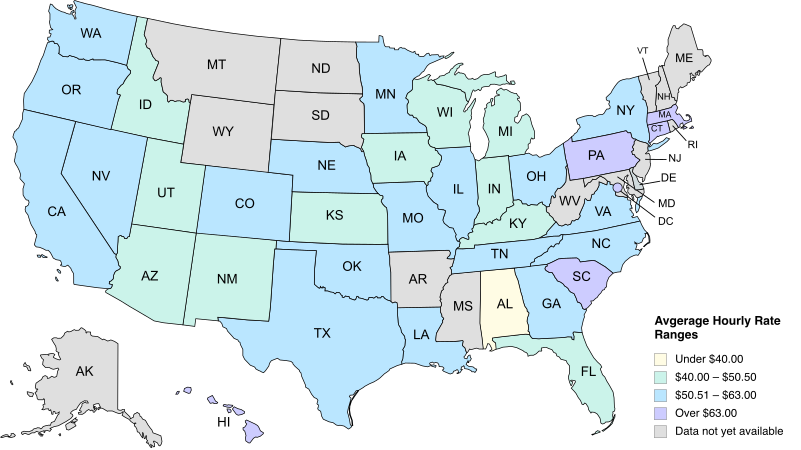
State-level repair rates provide a wider lens on appliance repair costs, helping you spot broader pricing patterns beyond individual cities. While city data reflects localized demand and job-specific factors, state averages can be especially useful for budgeting in suburban or rural areas, comparing costs across regions, or planning ahead if you expect to relocate. The map below outlines typical hourly rates by state to give you a clearer understanding of how appliance repair costs can vary across the country.
Factors that Impact How Much Appliance Repair Projects Cost
Several elements come into play when calculating the final bill for an appliance repair. Understanding these factors can help you anticipate costs and ask the right questions.
Type of Appliance
Not all appliances are built, or repaired, the same way. The type of appliance plays a major role in repair costs due to differences in complexity, parts, and labor requirements.
Refrigerators: Repairs often involve cooling components like thermostats, fans, or compressors. Issues related to temperature control or leaks can be more complex, especially for larger or built-in models.
Washing machines: Common repairs include replacing belts, pumps, valves, or electronic controls. Costs can vary depending on whether the washer is top-loading or front-loading and whether the issue is mechanical or electrical.
Dryers: Dryer repairs frequently address heating elements, thermal fuses, drums, or ventilation-related issues. Gas dryers may involve additional considerations compared to electric models.
Dishwashers: Typical repairs focus on drainage problems, pumps, spray arms, or door latches. Accessing internal components can affect labor time and overall cost.
Ovens and ranges: Repairs may involve heating elements, igniters, sensors, or control boards. Gas appliances can require different troubleshooting steps than electric models.
Microwaves: Issues often relate to door switches, control panels, or internal components that affect heating. Built-in or over-the-range microwaves can be more involved to service due to installation setup.
Garbage disposals: Repairs usually address jams, leaks, or motor-related problems. In some cases, replacement may be considered depending on the age and condition of the unit.
Complexity of Repair
A minor adjustment or a simple part replacement will typically be less expensive than a major repair involving internal components, electrical systems, or sealed units. For example, replacing a door seal is usually much cheaper than fixing a refrigerator compressor.
Parts Needed
The cost of replacement parts can vary significantly. While generic parts might be more affordable, original equipment manufacturer (OEM) parts often provide better compatibility and longevity. Specialized, rare, or discontinued parts will also drive up the total price.
Common appliance components that frequently require replacement and their associated costs to purchase include:
Microwave motors: $20–$100
Refrigerator thermostats: $50–$200
Washing machine belts or valves: $10–$150
Dryer heating elements: $30–$200
Dishwasher pumps: $50–$250
Oven igniters: $30–$200
Experience Level
Highly experienced or specialized technicians might charge more for their expertise, but they can also diagnose problems faster and complete repairs more efficiently, potentially saving you money in the long run.
Urgency
If you need an emergency repair outside of standard business hours, such as on a weekend or holiday, expect to pay a premium. Standard scheduling will almost always be more budget-friendly.
Location
As noted, the cost of living and operating a business varies by city and region, directly impacting labor rates for appliance repair services. Repairs in major metropolitan areas are typically more expensive than in rural ones
Depending on your location, a travel fee may be added to the bill if the technician has to travel a significant distance.
Warranty on Appliance
If your appliance is still under its manufacturer's warranty, a replacement or some or all of the repair costs might be covered. Always check your warranty details before scheduling a repair, as using an unauthorized repair service might void it.
Accessibility
Sometimes, an appliance is located in a tight space or requires significant effort to move and access for repair. If a technician needs more time to simply get to the faulty part, that extra labor time will add to your bill.
Hidden or Unexpected Appliance Repair Costs to Consider
When you're budgeting for an appliance repair, it's wise to consider some costs that aren't always immediately obvious. These can add up and surprise you if you're not prepared.
Diagnostic fees: Many professionals charge a separate fee just to diagnose the problem. This fee might be waived or applied to the total repair cost if you proceed with their service, but it's good to ask upfront.
Service minimums: Some companies or independent Taskers have a minimum charge for any service call, even if the repair is quick and simple.
Disposal fees: If your appliance is beyond repair and needs to be replaced, you might incur a separate fee for its proper disposal, especially for large items like refrigerators.
Additional parts: While a quote might include an estimate for parts, sometimes unforeseen issues arise during the repair that require additional components.
Common Appliance Repairs and Their Average Cost
The table below shows average cost ranges for common appliance repairs to help set general expectations. Keep in mind that actual repair costs vary based on factors discussed above.
| Repair Type | Estimated Cost |
|---|---|
| Dryer repair | $100-$300 |
| Microwave repair | $75-$250 |
| Dishwasher repair | $100-$350 |
| Oven/stove repair | $150-$400 |
| Refrigerator repair | $100-$400 |
| Washing machine repair | $150-$300 |
| Garbage disposal repair | $150-$250 |
When to Repair or Replace an Appliance
Deciding whether to repair or replace an appliance often comes down to cost, age, and overall reliability. While repairs can extend the life of many appliances, there are times when replacement may be the more practical option.
When Repairing Makes Sense
In many cases, a repair is the smarter and more cost-effective choice, especially if:
The appliance is relatively new: Most major appliances are designed to last several years, so early issues are often worth fixing.
The repair cost is significantly less than replacement: A good rule of thumb is to consider repair if the cost is under half the price of a new appliance.
The problem is isolated or minor: Issues like faulty switches, seals, belts, or hoses are often straightforward fixes.
The appliance otherwise works well: If performance has been reliable and energy use is reasonable, a repair can help you get more value from your investment.
When Replacement May Be a Better Option
Sometimes, putting money into repairs just doesn’t add up. Replacement may be worth considering if:
The appliance is nearing the end of its lifespan: Older appliances are more likely to need repeated repairs.
Repair costs are adding up: Frequent breakdowns can quickly exceed the cost of a new unit.
Parts are hard to find: For discontinued models, repairs can become more expensive or impractical.
Efficiency has declined: Newer appliances often use less energy and water, which can help lower ongoing utility costs.
Tips to Save Money on Appliance Repair Services
Saving money on appliance repair doesn't mean compromising on quality. A little preparation and smart decision-making can help you keep costs down.
Perform regular maintenance: Many appliance issues can be prevented with simple, routine maintenance. Clean refrigerator coils, dryer vents, and dishwasher filters regularly to keep things running smoothly and prevent major breakdowns.
Get multiple quotes: Don't settle for the first estimate you receive. Contact two or three different repair professionals or Taskers to compare pricing for the same repair.
Consider simple DIY fixes: For very minor issues, like a clogged drain or a tripped circuit breaker, you might be able to find troubleshooting guides online to fix it yourself. Just be sure you're comfortable and safe with the repair before attempting it.
Check your warranty: Before calling anyone, always check if your appliance is still under manufacturer warranty or if you have an extended service plan. This could save you significant money on parts and labor.
Bundle repairs: If you have more than one appliance acting up, or perhaps another household task needs attention, see if a professional offers a discount for bundling multiple services into one visit.
DIY vs. Hiring a Pro for Appliance Repair
Deciding whether to tackle an appliance repair yourself or call in a professional depends on a few key factors: the complexity of the problem, your comfort level, and safety considerations.
When to DIY
DIY repairs are generally best for simple, low-risk issues. This could include things like replacing a worn-out dryer lint filter, cleaning a refrigerator's condenser coils, resetting a circuit breaker, or replacing a simple light bulb inside an appliance. If a quick online search provides clear, step-by-step instructions for a fix that doesn't involve electrical wiring, gas lines, or sealed systems, you might be able to handle it.
When to Hire Appliance Repair Help
For anything beyond the most basic fixes, hiring a professional is strongly recommended. This includes repairs involving:
Electrical components: Messing with wiring can be dangerous and cause further damage.
Gas lines: Gas leaks are extremely hazardous and require specialized training.
Refrigerant systems: These are complex and involve hazardous chemicals.
Complex internal mechanisms: Modern appliances often have intricate electronics and moving parts that require specific tools and knowledge to repair correctly.
Warranty protection: Attempting a DIY repair might void your appliance's warranty.
Safety concerns: If you're unsure or uncomfortable, always err on the side of caution and call someone with expertise. A trusted professional can diagnose and fix the issue safely and efficiently, saving you headaches and potential hazards down the line.
How to Choose a Pro for Appliance Repair
Finding the right person for the job can make all the difference in a smooth and successful repair. Here’s how to choose a professional you can trust.
Read reviews: Look for professionals with a strong track record and positive feedback from past customers. Online platforms often provide ratings and comments that can offer valuable insights.
Compare quotes: Obtain detailed estimates from at least two or three different individuals or companies. Ensure the quotes include parts, labor, and any potential diagnostic or travel fees.
Ask about experience: Inquire about their experience with your specific appliance brand and type. Someone who specializes in refrigerators might be a better choice for your faulty fridge than a general handyman.
Confirm insurance: Ensure the professional carries liability insurance. This protects you in case of any accidental damage to your property during the repair process.
Clear communication: Choose someone who communicates clearly, explains the problem in terms you understand, and answers all your questions patiently.
What to Expect When Booking Appliance Repair Tasks Through Taskrabbit
When you book an appliance repair task through Taskrabbit, you can browse local, background-checked Taskers and choose someone based on their experience, rates, and reviews. During booking, you’ll share key details like the appliance type, brand, model, and a description of the issue to help the Tasker prepare.
After booking, you can message your Tasker to answer questions or provide additional context. The Tasker will arrive with tools to diagnose the problem and explain potential next steps. Booking through Taskrabbit makes it easy to get help on your schedule and decide how to move forward with confidence.
Frequently Asked Questions about Appliance Repair
A tip of 10%-20% is typical, but not required.
Typically, an appliance repair quote will include both the cost of necessary replacement parts and the labor involved in installing them and completing the repair. Always confirm this breakdown with your chosen professional to avoid surprises.
The 50/50 rule suggests replacing an appliance if the repair cost exceeds 50% of the price of a new unit and the machine is more than 50% through its expected lifespan. Following this guideline helps you avoid investing in aging equipment that is likely to face more frequent breakdowns or high energy costs in the near future.
In some cases, yes. If you've already identified the specific part needed and sourced it yourself, you can discuss this with your technician. They may be able to install it for you, potentially saving on the markup you might pay if they sourced the part. However, some technicians prefer to use parts they source to ensure quality and compatibility.