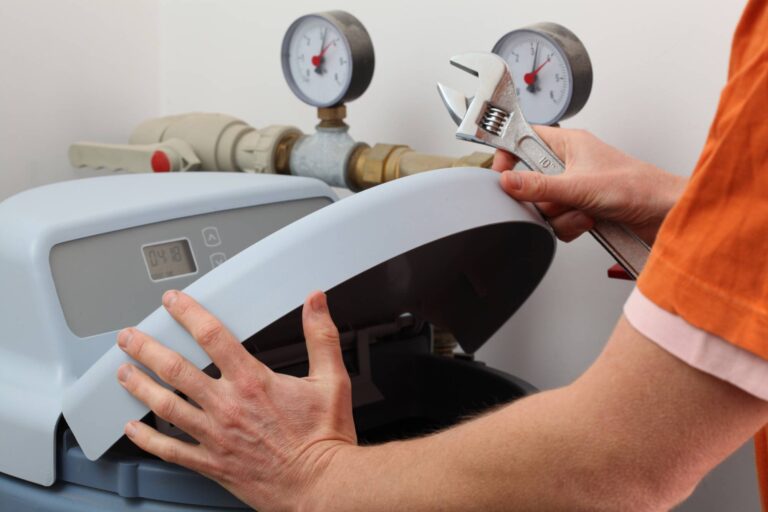
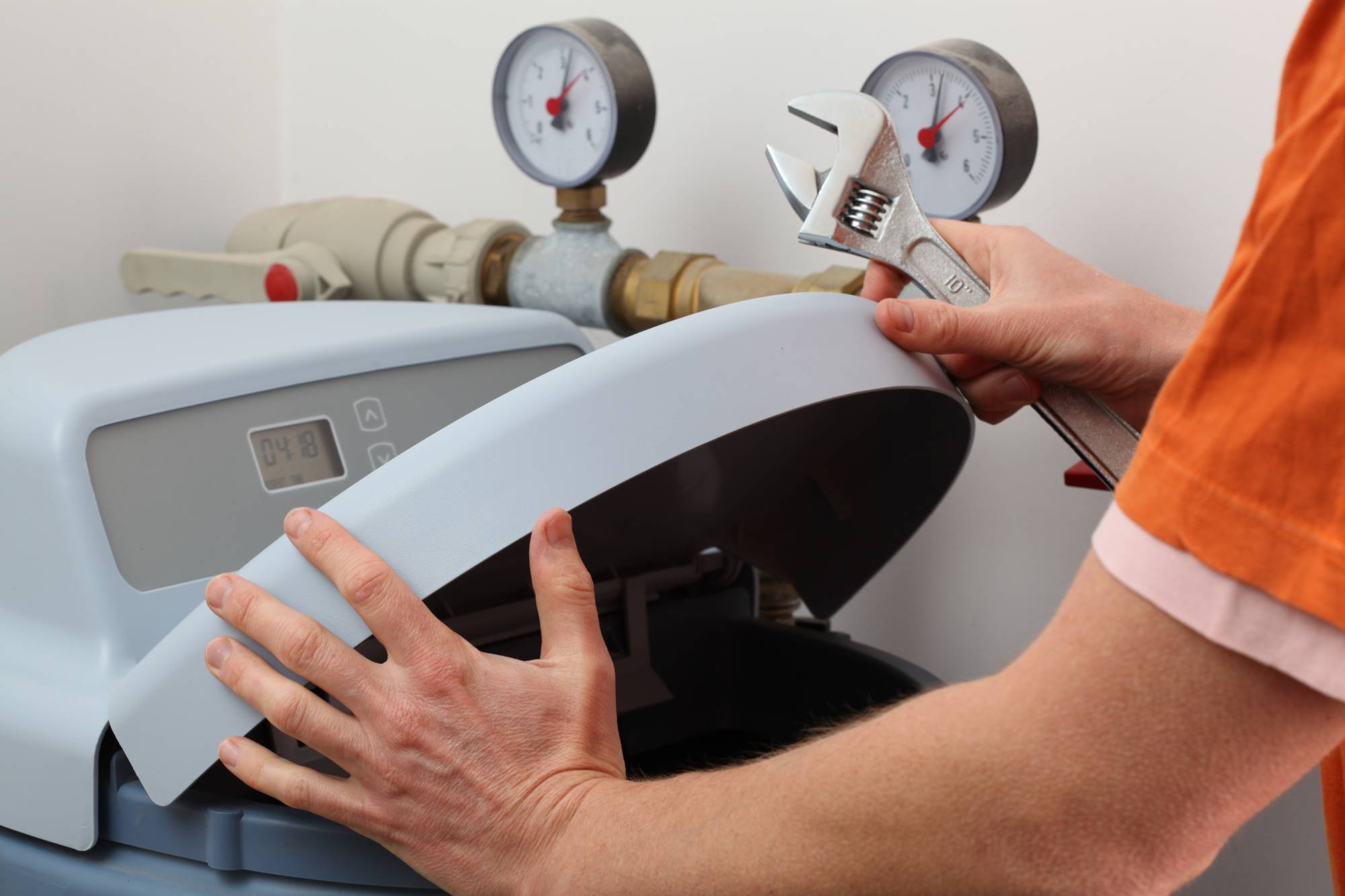
Water softener maintenance keeps your system producing soft water effectively. This guide covers essential DIY tasks, from refilling salt to fixing salt bridges, and helps you recognize when to call a professional.
Why water softener maintenance matters
Regular maintenance keeps your water softener running efficiently. Check salt levels monthly, clean components annually, and watch for problems. Without proper care, your system will stop removing hardness minerals, bringing back low water pressure, scale, and the other issues you installed it to solve.
Your water softener uses ion exchange, which is when tiny plastic beads grab calcium and magnesium as water flows through. Over time, these beads fill up and need cleaning through a regeneration cycle that rinses minerals down the drain with salt water. Skip maintenance, and this process breaks down.
Poor maintenance affects your daily life and wallet:
- Scale buildup: White, chalky deposits on faucets, shower heads, and dishes
- Appliance damage: Your dishwasher, washing machine, and water heater wear out faster
- Higher utility bills: A struggling system uses more salt and water
- Premature failure: Components break down under poor conditions
Skipping maintenance might seem like savings, but you’ll spend more on repairs and hard water damage.
How to take care of a water softener
Check and refill water softener salt
Check your brine tank monthly to prevent running out of salt.
What to look for:
- Keep the tank between one-quarter and half full
- Salt should be dry on top and above any water at the bottom
- Add more if you see more water than salt
- Leave several inches of space at the top
- Use salt pellets for better dissolving and less clumping
A family of four typically uses 40-80 pounds monthly. Track your usage to anticipate refills.

Clean the brine tank
Add brine tank cleaning to your annual home maintenance checklist to remove dirt, salt residue, and bacterial growth. You’ll know it’s time if the water looks murky, smells unusual, or regeneration slows down.
Plan to clean when your salt supply runs low. Most homeowners find this timing works naturally with their refill schedule.
- Empty the tank: Remove all salt and drain water. Scoop out salt first if the tank is too heavy to tip.
- Scrub thoroughly: Use a long-handled brush with dish soap and water. Focus on the bottom where sludge accumulates.
- Rinse completely: Flush until all soap and debris are gone.
- Refill and restart: Add fresh salt and a few gallons of water.
This takes about an hour and immediately improves efficiency.
Fix salt bridges and salt mushing
These common problems make your softener appear to work while not actually softening water.
A salt bridge is a hard crust that forms across the salt, creating a hollow space underneath. Salt mushing is a thick, paste-like layer at the bottom that won’t dissolve. They are commonly caused by high humidity, poor-quality salt, and overfilling the tank.
Both prevent proper brine creation. Your system goes through regeneration cycles, but without brine, hard minerals break through into your water.
- Test for bridges: Push a broom handle down through the salt. A hard surface that doesn’t give means you have a bridge.
- Break carefully: Tap gently to break the crust into pieces. Avoid sharp objects or excessive force.
- Remove mush: Scoop out paste-like salt from the bottom.
- Prevent recurrence: Switch to pellet salt and avoid overfilling, especially in humid climates.
Your next regeneration cycles should be more effective. If problems recur, consider environmental factors and try a different salt type.
Restore the resin bed performance with resin cleaner
The resin bed, made up of thousands of tiny plastic beads, is your water softener’s heart. These beads grab hardness minerals but become less effective over time due to iron, manganese, and organic compounds that salt can’t remove.
Fouled resin means your softener can’t produce truly soft water, even with correct salt levels and normal regeneration. This decline is often mistaken for other problems.
Resin cleaners remove contaminants that salt can’t handle. If your water contains iron, manganese, or organic matter, use a cleaner every few months. Pour the recommended amount into your brine tank before the next regeneration. The cleaner mixes with brine and cleans the resin beads. Most homeowners notice improved water quality within a day or two.
Iron-heavy water needs monthly cleaning, while homes with a whole house water filter might only need resin treatment twice yearly.
Replace the resin beads
Resin beads last 10-15 years, depending on water quality and usage. Replacement time approaches when cleaning no longer restores performance.
Signs of failing resin:
- Hard water despite proper salt levels and cleaning
- Visible resin beads in faucets or appliance filters
- Discolored water or unusual tastes and odors
- Increased salt usage without improved performance
Resin replacement requires draining the system, removing old resin, and installing new material. While possible as DIY, most homeowners prefer professional installation for proper calibration.
Professional water softener maintenance and when to book a Tasker
Routine tasks like salt refilling and basic cleaning are manageable, but water softeners have complex components that need professional expertise. The venturi valve, bypass valve, and control head can malfunction in ways that aren’t obvious.
Professionals have specialized tools to test water hardness, measure flow rates, and diagnose electronic problems. They perform system sanitization, calibrate settings, and identify issues before they cause failures.
Annual inspections catch problems early and ensure peak efficiency. Many issues are simple adjustments that cost far less than emergency repairs.
Here’s when to DIY versus call a pro:
| DIY Maintenance | Professional Service |
|---|---|
| Salt refilling and monitoring | Venturi valve cleaning and adjustment |
| Basic brine tank cleaning | Electronic control diagnostics |
| Salt bridge removal | Resin bed replacement |
| Visual inspections | System calibration and testing |
| Simple troubleshooting | Warranty repairs and modifications |
Complex repairs without proper knowledge create bigger problems. Electrical components, pressurized connections, and precision settings require expertise.
When your water softener needs more than basic maintenance, skilled Taskers with plumbing experience can handle complex repairs efficiently, letting you focus on what matters.
Professional maintenance often costs less than DIY mistakes. A Tasker with water treatment experience diagnoses problems quickly, repairs correctly the first time, and helps you understand what you can handle versus what needs a pro.
Water softener maintenance FAQs
How often should I add salt to my water softener?
Most households need to add salt every 6-8 weeks, but this varies based on water hardness, daily usage, and tank size. Check monthly to establish your specific pattern.
What type of salt works best for water softeners?
Salt pellets are generally the best choice because they dissolve evenly and resist bridging better than crystals or rock salt.
Why is my water softener using salt but not softening water?
This usually indicates a salt bridge, mushed salt, or fouled resin beads that prevent proper regeneration even though salt is being consumed.
Can I use regular table salt in my water softener?
No, table salt contains additives that can damage your system. Only use salt specifically labeled for water softeners.
How do I know if my water softener resin needs replacing?
Signs include hard water despite proper maintenance, resin beads in your water lines, discolored water, or dramatically increased salt usage without improved performance.
What happens if I let my water softener run out of salt completely?
The system will stop softening water immediately, and you’ll need to add salt and wait through several regeneration cycles before soft water returns.
Should I turn off my water softener when I go on vacation?
For trips longer than a week, putting your system in bypass mode prevents unnecessary regeneration cycles and conserves salt.
Last updated on February 19, 2026 by Grace Branscome