
The right curtain height can make a window look taller, a room feel more spacious, and your curtains look like they belong. Hang them too low, though, and even beautiful panels can make a window feel smaller.
So, how high should you hang curtains? A common starting point is 4–6 inches above the window trim, but the best placement depends on your ceiling height, curtain length, and the look you’re going for.
Here’s how to find the right curtain height for your space.
How High Above the Window Should You Hang Curtains?
For most windows, positioning the curtain rod about 4–6 inches above the top of the window trim is a practical starting point.
Hanging curtains higher can draw the eye upward, making the window and ceiling appear taller. However, higher isn’t always better. The placement should work with your curtain length, ceiling height, and available wall space.
Consider these factors when deciding where to position your rod:
- Window height: A higher rod can help smaller windows appear taller.
- Ceiling height: The space between your window trim and ceiling affects how much flexibility you have.
- Curtain length: Your panels need to be long enough to reach your preferred stopping point.
- Curtain style: Grommets, rings, tabs, and rod pockets can affect where the fabric hangs in relation to the rod.
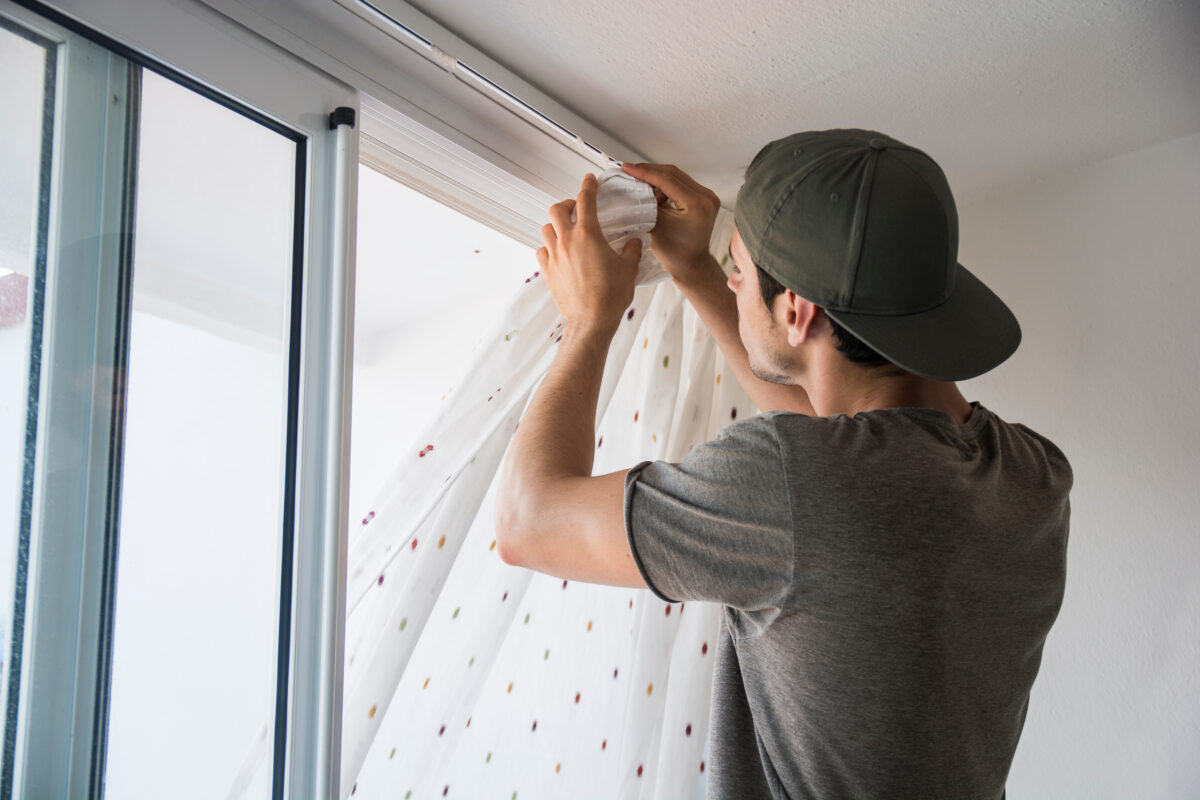
Before settling on a height, hold a curtain panel against the wall or measure from the desired hem position. This helps you see how the finished curtains will look.

Should You Hang Curtains Close to the Ceiling?
Hanging curtains closer to the ceiling can make a room feel taller by drawing attention upward.
If you have plenty of wall space above your window, you can experiment with placing the rod higher than the standard 4–6 inches above the trim.
One approach is to position the rod roughly halfway to two-thirds of the way up the space between the top of the window trim and the ceiling. This can create a balanced look without placing the rod directly against the ceiling.
However, this is a design guideline, not a requirement. Your curtain length and the space available should ultimately guide the decision.
How High to Hang Curtains With Low Ceilings
In rooms with lower ceilings, mounting curtains higher can help create the appearance of more vertical space.
If there’s limited room between the window and ceiling, consider positioning the rod closer to the ceiling while leaving enough clearance for the brackets, finials, and curtain hardware. For windows where curtains aren’t practical, there are also ways to dress a window without curtains.
You don’t need to force a specific measurement. The goal is to create a balanced look while allowing the curtains to hang at the intended length.
How High to Hang Curtains With High Ceilings
Rooms with high ceilings offer more flexibility, but that doesn’t mean the rod needs to sit directly beneath the ceiling.
Consider the proportions of the wall, the height of the window, and the length of the curtains.
For particularly tall walls, positioning the rod higher can help emphasize the room’s height. Just make sure the panels are long enough to reach the floor or your preferred stopping point.
If standard curtain lengths don’t work with your chosen placement, you may need longer panels or custom-sized curtains.
How Far Off the Floor Should Curtains Hang?
The distance between the bottom of your curtains and the floor plays an important role in their finished appearance.
There’s no single correct length. The best choice depends on the look you want and how you use the room.
| Curtain Style | Where the Curtains End | Best For |
|---|---|---|
| Just above the floor | Approximately ½ inch above the floor | A clean look with minimal floor contact |
| Floor-length | At or very close to the floor | A tailored, finished appearance |
| Puddled | Extra fabric gathers on the floor | A softer, more dramatic style |
| Sill-length | At or near the windowsill | Windows where longer curtains aren’t practical |
| Below-sill | Slightly below the windowsill | Shorter curtains with a little extra coverage |
Floor-Length Curtains
Floor-length curtains are a popular choice for living rooms, bedrooms, and other spaces where you want a polished appearance.
For a clean finish, you can position the hem approximately ½ inch above the floor. This creates the appearance of full-length curtains without having the fabric rest directly on the ground.

If you prefer a softer look, you can allow the fabric to touch the floor.
Puddled Curtains
Puddled curtains extend beyond the floor so that extra fabric gathers at the bottom.
This style can create a relaxed, dramatic appearance, particularly with softer fabrics.
However, pooled fabric may require more frequent cleaning and can be less practical in high-traffic areas or rooms where curtains are opened and closed often.
Choose this style based on both the appearance you want and how you’ll use the space.
How to Choose the Right Curtain Length for Your Rod Height
Your preferred curtain rod height and the length of your panels should work together. Before hanging your curtains, decide where you want the hems to fall so you can choose a rod position that works with your panels.
Standard ready-made curtain lengths commonly include 84, 96, and 108 inches, although availability varies by brand and style.
Rather than choosing a rod height first and hoping your curtains fit, work backward from where you want the hem to land.
For example, if you want floor-length curtains, consider:
- The distance from the floor to your preferred rod position
- How the panels attach to the rod
- Whether the curtains should hover above, touch, or puddle on the floor
- Whether your chosen curtain length allows for a higher rod placement
A curtain hung from rings may fall differently than one with grommets or a rod pocket, even if the panels are labeled the same length.
Tip: Check the curtain manufacturer’s measurement guidance before deciding on the final rod height. The attachment style can affect the finished drop.
Common Curtain Height Mistakes to Avoid
A few placement mistakes can affect how your curtains look, even when you’ve chosen the right fabric and style.
- Hanging the rod too low: Placing the rod directly above the window trim can make the window appear shorter. Consider starting 4–6 inches above the trim and adjusting for your space.
- Choosing a height without checking curtain length: A higher rod won’t create the look you want if the panels end several inches above your intended stopping point.
- Ignoring the curtain attachment style: Rings, grommets, tabs, and rod pockets can change where the fabric falls relative to the rod.
- Mounting too close to the ceiling without enough clearance: Leave sufficient space for the curtain hardware and any decorative rod ends.
- Overlooking uneven floors: Floors aren’t always perfectly level. Check where the curtain hems will land across the window before finalizing the placement.
Get Help With Curtain Placement and Installation
Choosing the right curtain height can take some trial and error, especially when you’re working with high ceilings, long panels, or unusually shaped windows.
If you’d rather have help measuring and mounting your curtains, Taskrabbit connects you with Taskers who can assist with curtain and blind installation.
Whether you’re aiming for a floor-length look or want to position your curtains higher to make the room feel taller, a Tasker can help you bring your plans together.
Last updated on October 27, 2026 by Grace Branscome